

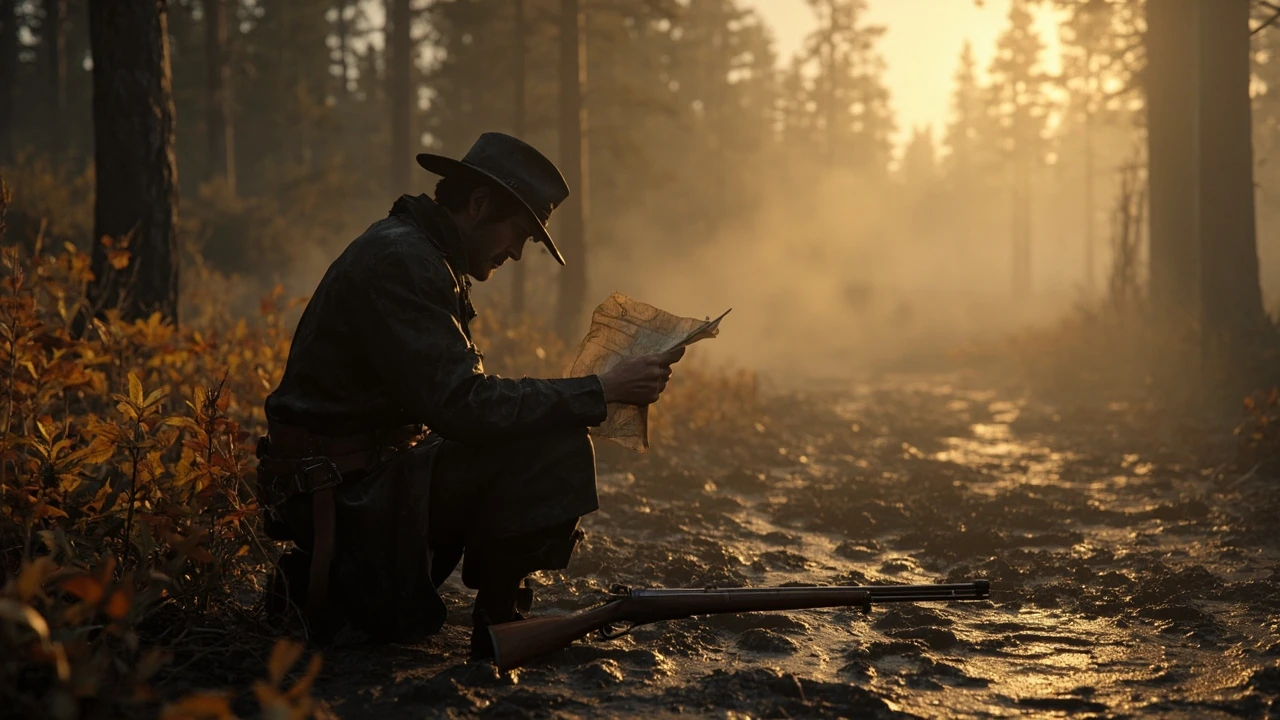
RDR2 legendary animals explained: how the hunting and crafting system actually works
Every apex beast in Red Dead Redemption 2 represents a deliberate design choice about pacing, reward, and player mastery. The 16 RDR2 legendary animals that roam the open world are not random high-stat spawns. They are tied to a craft loop that routes rare pelts, claws, teeth, and horns into the Trapper for unique outfits and into the Fence for permanent stat-boosting talismans. A single missed skin does not lock a player out of the rewards, but it does cost them the one-off material that an ordinary hunt could never replace. Understanding that loop is what turns a long list of map markers into a focused hunting plan.
From a production standpoint, these encounters are also a useful case study in encounter placement, gating, and persistent reward delivery. Each species sits in a fixed location, requires a specific approach, and feeds into a vendor pipeline that tolerates a failed skin. The rest of this guide covers the mechanics, the map layout, the unlock conditions, and the design lessons that a developer or curious player can take from the system.
How many RDR2 legendary animals are there and where they fit in the game
The legendary set in RDR2 is split into two distinct collectible systems: 16 terrestrial apex animals and 13 legendary fish. The two use different vendors, different lures, and different unlock conditions, but both sit on the same underlying principle: rare, location-bound encounters that gate unique cosmetic and stat rewards. Players often ask “how many legendary animals are in rdr2” because the badges in the compendium and the map markers are the visible surface of a deeper crafting loop.
The terrestrial half of the set covers New Hanover, Ambarino, Lemoyne, New Austin, and the edges of West Elizabeth. Each creature is a single, named variant of a common species and only appears at one fixed location in the world. The map mark changes from a question mark to a small golden image of the animal wearing a crown once the player has discovered it, which doubles as both a progress tracker and a navigation aid.
There is a 17th, semi-legendary encounter tied to the story: the bull gator of Bayou Nwa. It is not flagged as a legendary on the map or compendium, but it sits at the high end of the predator scaling and uses a similar tracking pattern. Most players encounter it through ambient world events rather than a deliberate hunt, which is itself an interesting design choice about gating optional apex content behind curiosity rather than quest triggers.
Core mechanics: tracking, baiting, skinning, and reward delivery
Every RDR2 legendary animal hunt follows the same five-step cadence. Once a player learns that cadence, the only thing that changes between species is the location, the bait, and the danger profile.
- Travel to the documented region and enter the search area. Binoculars or the scoped rifle help spot a corpse, antler, or fur tuft in the distance.
- Track the trail using Eagle Eye. Each species leaves a distinct colour tint and footprint pattern, and the trail leads to the animal or to a piece of evidence such as a kill site.
- Use the correct bait or lure if the trail goes cold. Predator and herbivore hunts use different bait types, and fish need specific Special Lures.
- Engage carefully. Herbivores often flee, predators counterattack, and the Legendary Bear and Legendary Bull Gator can kill an unprepared player in two or three hits.
- Skin the body, then carry the resulting pelt, claw, tooth, or horn to either the Trapper or the Fence.
Skinning is where the system earns its reputation. The pelt cannot be sold to a general store and cannot be stored on a horse indefinitely without risk. If the body falls into deep water or out of bounds, the player cannot manually retrieve it. The system handles that failure state by sending the one-off crafting material to the relevant vendor anyway, so the player still receives the unique outfit piece or trinket. They simply lose the trophy and the satisfaction of a clean skin.
Trapper purchases consume the legendary pelt itself. Fence purchases trade claws, eyes, and other oddities for talismans and trinkets that permanently alter stats: the Buck Antler improves the quality of all future skins, the Wolf Heart causes dead animals to stay in the world longer, the Elk Antler makes abilities like Eagle Eye and Dead Eye drain more slowly, and so on. The reward structure is therefore split into cosmetic completionism at the Trapper and mechanical advantage at the Fence.
Legendary animal map by region
The 16 land-based apex hunts break down cleanly across the five main regions. The table below summarises the location, the primary loot, and the unlock requirement when one applies. Locations are drawn from the documented in-game regions and named landmarks.
| Animal | Region | Location hint | Primary loot | Unlock requirement |
|---|---|---|---|---|
| Legendary Bear | Ambarino, Grizzlies East | Clearing north of the lake at O’Creagh’s Run | Pelt, Claw | Complete “Exit Pursued by a Bruised Ego” in Chapter 2 |
| Legendary White Bison | Ambarino, Grizzlies West | North shore of Lake Isabella | Pelt, Horn | None |
| Legendary Elk | New Hanover / Ambarino border | Woods east of Bacchus Station, north-east of Fort Wallace | Pelt, Antler | None |
| Legendary Moose | New Hanover, Roanoke Ridge | Far north-east corner, north from Annesburg or upriver from Brandywine Drop | Pelt, Antler | None |
| Legendary Beaver | New Hanover | South-east of Elysian Pool, west of Van Horn Trading Post | Pelt, Tooth | None |
| Legendary Ram | New Hanover | Hills north of the railroad, east of Cattail Pond, east of Valentine across the Dakota | Hide, Horn | None |
| Legendary Wolf | New Hanover, Cotorra Springs | South-west of Wapiti Reservation, across the Dakota north of Fort Wallace | Pelt, Heart | None |
| Legendary Boar | Lemoyne, Bayou Nwa | North-west section of Bluewater Marsh, northern edge of the bayou | Pelt, Tusk | None |
| Legendary Alligator | Lemoyne, Bayou Nwa | South of Lagras, swampy ground west of Lakay | Skin, Tooth | None |
| Legendary Coyote | Lemoyne, Scarlett Meadows | West end of Dewberry Creek, north-west of Rhodes | Pelt, Tooth | None |
| Legendary Fox | Lemoyne | East of Mattock Pond, north of Rhodes | Pelt, Claw | None |
| Legendary Panther | Lemoyne | Woods south of Bolger Glade, west of Shady Belle | Skin, Eye | Complete all 9 Master Hunter Challenges |
| Legendary Cougar | New Austin, Gaptooth Ridge | West of Tumbleweed | Pelt, Claw | None |
| Legendary Pronghorn | New Austin | East and slightly south of Fort Mercer | Hide, Horn | None |
| Legendary Tatanka Bison | New Austin, Hennigan’s Stead | South of Stillwater Creek | Pelt, Horn | None |
| Legendary Buck | West Elizabeth | Black bone forest at the western foot of Mt. Shan, north-west of Strawberry | Pelt, Antler | None |
Two of those entries deserve extra context. The Legendary Bear is a soft story gate. The player has to be far enough into Chapter 2 to trigger the set-up mission; the bear is then available for the rest of the playthrough. The Legendary Panther is the only pure progression gate in the set, since it requires the full Master Hunter challenge chain. That is also why Panther runs are usually planned as the capstone of a long hunting session rather than a casual detour.
Legendary fish: a parallel system with its own rules
Thirteen For additional context, legendary fish use the same single-instance, no-respawn rule, but they route through a different vendor and depend on a stranger quest for the map. To find them, the player needs to speak with Jeremy Gill on the pier along the north-east shore of Flat Iron Lake and start the mission line A Fisher of Fish. He mails a hand-drawn map that reveals the spawn points.
| Fish | Region | Water | Required lure |
|---|---|---|---|
| Legendary Bluegill | Lemoyne | South of Clemens Point, off Flat Iron Lake | Special Lake Lure |
| Legendary Catfish | New Hanover, Sisika Island | Creek deltas west of Sisika Penitentiary | Special River Lure |
| Legendary Chain Pickerel | New Hanover | Dakota running north-west of Flatneck Station | Special River Lure |
| Legendary Gar | Lemoyne, Bayou Nwa | Marshy swamp between Lakay and Lagras | Special Swamp Lure |
| Legendary Largemouth Bass | New Austin | South-east of Lake Don Julio, San Luis River | Special River Lure |
| Legendary Muskie | New Hanover | Lighthouse at the south end of Van Horn Trading Post | Special River Lure |
| Legendary Perch | New Hanover, Roanoke Ridge | Elysian Lake, south-west of Annesburg | Special Lake Lure |
| Legendary Redfin Pickerel | New Austin | Largest pool of Stillwater Creek between Thieve’s Landing and MacFarlane’s Ranch | Special Lake Lure |
| Legendary Rock Bass | West Elizabeth, Tall Trees | Aurora Basin, head of the Lower Montana River west of Manzanita Trading Post | Special Lake Lure |
| Legendary Salmon | Ambarino, Grizzlies West | Lake Isabella | Special River Lure |
| Legendary Smallmouth Bass | West Elizabeth | Lake Owanjila, west of Strawberry between Big Valley and Tall Trees | Special Lake Lure |
| Legendary Sturgeon | Lemoyne | Railroad bridge over the mouth of the Lannahechee River, between Saint Denis and Rhodes | Special River Lure |
| Legendary Trout | New Hanover | Basin far north of Annesburg, Kamassa River north of Brandywine Drop | Special River Lure |
The Bluegill has one extra wrinkle: it can pop up during Chapter 3 if the player accepts Kieran’s offer to go fishing. That makes the Bluegill a useful first catch, because the player has not yet been exposed to the full Special Lure economy. Once the dedicated fishing line unlocks, the remaining twelve fish are pure map-reading exercises with the correct bait.
Recommended hunting order and unlock prerequisites
Players who optimise the full set usually plan a route that respects the story gates and the available bait. The recommended sequencing for a single playthrough is short and deliberate.
- Chapter 2, after Exit Pursued by a Bruised Ego: hunt the Legendary Bear, the Legendary Elk, and the Legendary White Bison in the same northern sweep.
- Early Chapter 3, after the Kieran fishing offer: catch the Legendary Bluegill to learn the lure pattern, then continue the Kieran and Jeremy Gill threads.
- Mid game, after accepting A Fisher of Fish: clear the Lake Isabella and Strawberry cluster, which covers the Salmon, Smallmouth Bass, and the Legendary Buck.
- Mid-to-late Chapter 4, after unlocking predator bait from the Trapper and general store stock: work the Lemoyne and New Austin predators and the Bayou Nwa set, which includes the Boar, Alligator, Coyote, Fox, and Cougar.
- Late game, after the final Master Hunter Challenge: hunt the Legendary Panther and the Legendary Pronghorn to close the western half of the map.
That ordering is a soft recommendation, not a hard dependency. The bear, elk, and bison set can be tackled as soon as Chapter 2 opens because all three sit in the same Ambarino region, share a single fast-travel point at O’Creagh’s Run, and do not require predator bait. Clearing them early also gives the player a stockpile of high-quality big-game meat for camp upgrades before they commit to the longer southern runs.
Reward paths: Trapper outfits and Fence trinkets
Every legendary pelt or hide can be sold or donated to the Trapper for a unique outfit piece. The pieces are split across several thematic sets: the Bear Hunter set, the Trophy Buck set, the Bounty Hunter set, the Panther Set, and so on. Each set requires the matching legendary pelt plus several perfect pelts of the regular species. Once completed, the set can be worn for cosmetic and warmth bonuses, and a few pieces unlock stat perks such as reduced weapon degradation or improved bow draw speed.
The Fence trades the smaller, less intuitive drops: claws, teeth, antlers, eyes, hearts, and the Pronghorn horn. The trade goods and their effects are:
- Legendary Bear Claw: ingredient for the Bear Claw Talisman, which slows core depletion while mounted.
- Legendary Buck Antler: ingredient for the Buck Antler Trinket, which improves the quality of all skins taken from animals.
- Legendary Cougar Claw: ingredient for the Cougar Claw Talisman, which gives a chance to locate nearby collectibles on the map.
- Legendary Elk Antler: ingredient for the Elk Antler Trinket, which reduces the rate at which Eagle Eye and Dead Eye drain.
- Legendary Fox Claw: ingredient for the Fox Claw Trinket, which improves the quality of the player’s longarms and sidearms.
- Legendary Moose Antler: ingredient for the Moose Antler Trinket, which slows health-core depletion.
- Legendary Panther Eye: ingredient for the Panther Eye Trinket, which improves Dead Eye regeneration.
- Legendary Pronghorn Horn: ingredient for the Pronghorn Horn Trinket, which improves the player’s ability to cook and craft at camp.
- Legendary Wolf Heart: ingredient for the Wolf Heart Trinket, which slows the rate at which recently skinned animals despawn.
Trapper sets are about completion and role identity, while Fence trinkets are about measurable gameplay leverage. The Buck Antler is the most-cited priority because it improves the entire skinning economy that the rest of the player’s hunting time is built on, but the Longarms and Sidearms trinket from the Fox Claw is the most useful for a player who plans to lean on gunplay in the late chapters.
What to do when a legendary animal will not spawn
The single most common hunt failure is the “empty map marker” problem. The marker is on the map, the player rides into the search area, and the animal is not there. The pattern has a few common causes, and each has a simple diagnostic check.
- Distance from the marker: legendary spawns trigger only when the player is within a short radius. Riding too far on autopilot, fast-travelling, or staying mounted on the road often prevents the encounter from loading. Dismount and walk the last stretch.
- Time of day: the spawn window is generous but not universal. Most hunts work between mid-morning and dusk; some predators are more reliable at night. Waiting by a campfire and passing time is a normal part of the loop.
- Nearby predators or herd animals: a fully fed predator will despawn. Killing wolves or other large carnivores in the same region before the encounter can suppress the legendary spawn. Leave the area, ride away, then return.
- Story or challenge gating: the Legendary Bear requires the Chapter 2 mission, the Legendary Panther requires the full Master Hunter challenge set, and the Legendary Bull Gator is only reliable after a certain reputation threshold. Verify the unlock state before assuming a bug.
- Save and reload: a corrupt encounter flag can stop the animal from loading. Save at the nearest camp, restart the application, then return to the marker.
Players sometimes worry that a failed skin has locked them out of the rewards. It has not, as long as the animal was actually killed. The reward material is automatically forwarded to the Trapper or Fence even if the body is unrecoverable, so a clean kill is the only prerequisite for the cosmetic and trinket unlocks.
Why the system feels different from a typical open-world checklist
Most open-world games treat apex hunts as a flat collectible: kill ten wolves, get an achievement. The RDR2 legendary animals system uses a smaller pool of targets and routes every single one into either a vendor craft loop or a permanent stat upgrade. That is why the set feels weighty. Each kill permanently removes a creature from the world, permanently changes the player’s crafting inventory, and permanently changes the late-game combat and survival balance.
From a game development angle, that design choice has three clear consequences. First, it forces a one-per-save commitment, which turns every hunt into a meaningful resource decision. Second, it lets the player self-direct difficulty by choosing to clear the easy herbivores first or to push straight for the Panther. Third, it pairs rare cosmetic content with rare mechanical content, which keeps the late-game loop from collapsing into a pure collectible checklist.
The “automatic reward delivery” mechanic is also a useful case study in forgiving failure without making the rewards meaningless. The player still has to make the kill, choose the right bait, and survive the encounter, but they are not punished for a single physics glitch. That kind of safety net is a sensible default for any apex-hunt system: the integrity of the kill, not the cleanliness of the skin, is what matters for progression.
Frequently asked questions
How many legendary animals are there in RDR2?
There are 16 legendary animals on land and 13 legendary fish in the water, for a combined total of 29 named apex encounters. The land set spans New Hanover, Ambarino, Lemoyne, New Austin, and West Elizabeth. The fish set is unlocked through the Jeremy Gill stranger quest line on the pier north-east of Flat Iron Lake.
Do RDR2 legendary animals respawn?
No. Each legendary animal is a one-time spawn on the player’s current save. If the body is lost or the skin fails, the crafting material is sent to the Trapper or Fence automatically, but the animal itself does not reappear. A reload to an earlier save is the only way to re-spawn a legendary encounter.
Which legendary animal gives the best reward?
The Legendary Buck Antler is widely considered the highest-value trinket, because the Buck Antler Trinket improves the quality of every skin the player takes from then on. The Legendary Fox Claw, which improves longarm and sidearm quality, is a close second for combat-focused players.
What is the best weapon for hunting legendary animals?
A scoped rifle with express or high-velocity ammo is the standard choice for herbivores, because a clean headshot is required to keep the pelt at perfect quality. For predators, a Repeater or a close-range sawed-off Shotgun loaded with slugs is often safer, since the Legendary Cougar and Legendary Panther can close distance very quickly.
Can I carry a legendary pelt on my horse?
Yes, a single legendary pelt can be carried on the horse. The bigger risk is that the horse dies, the pelt falls into water, or the body slides into an out-of-bounds collision. The Trapper and Fence still receive the one-off material in those cases.
Do I need to start the Master Hunter challenges to hunt the legendary animals?
Only the Legendary Panther requires the full Master Hunter chain. The other 15 land hunts do not depend on the challenge set, and the fish hunts do not depend on it either. Master Hunter challenges do, however, give the player a useful set of exploration tools that make the later hunts easier to plan.
Is the bull gator of Bayou Nwa a legendary animal?
It is a semi-legendary apex predator that uses a similar tracking and baiting pattern, but it does not appear in the legendary compendium section and does not yield a legendary pelt. Most players encounter it through the random Bayou Nwa event chain rather than through a dedicated marker.
What bait do I need for each type of legendary animal?
Predators respond to predator bait such as the Potent Predator Bait. Herbivores respond to herbivore bait such as the Potent Herbivore Bait. Fish require the matching Special Lure: Special Lake Lure, Special River Lure, or Special Swamp Lure, depending on the water type.
Where is the Trapper and the Fence?
The Trapper can be found in several locations, including St. Denis and several trading posts in the wilderness. The Fence can be found in Rhodes, Emerald Ranch, and Saint Denis. Both vendors restock their legendary item lists as soon as the player delivers the relevant material.
Are the legendary fish worth the time?
They are worth the time if the player wants the full set of legendary-themed Trapper outfits or the related lures. Mechanically, legendary fish do not give the same stat trinkets as the land hunts, so a player who only wants combat leverage can treat the fish as an optional completion target.





Leave a Reply