
Marvel Rivals characters: how the roster is designed and why the kits feel distinct
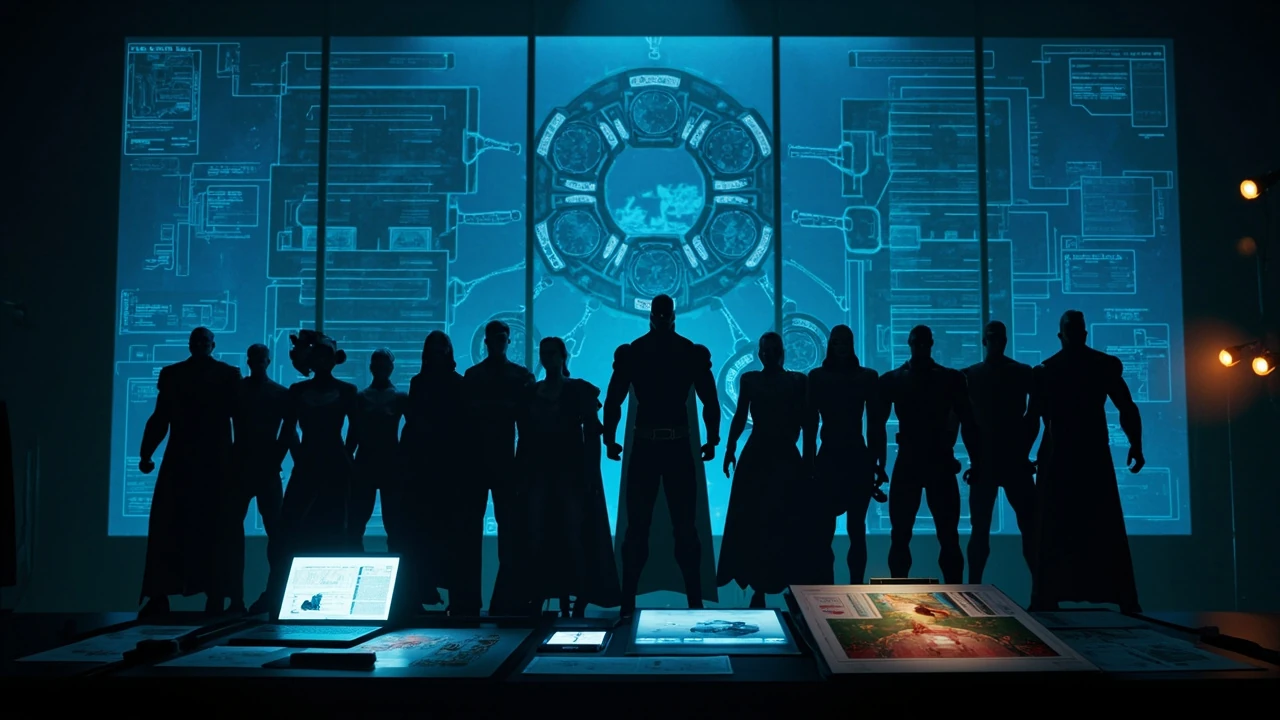
The phrase “marvel rivals characters” usually means a reader wants to know more than a name list. The interesting question is how the development team built a hero shooter roster on top of a comic book IP without letting every character collapse into a generic damage dealer. Marvel Rivals, the 6v6 multiplayer shooter developed by NetEase Games in collaboration with Marvel Games, ships with a cast that mixes frontline tanks, duelist damage heroes, strategists, and a smaller number of support-adjacent picks. Each kit is built around a specific fantasy, then constrained so that fantasy can survive a real team fight rather than dominating one. This page walks through the design vocabulary that makes the marvel rivals characters feel like a system, not a checklist.
The roster design also matters from a production standpoint. A hero shooter lives or dies on how much space each character takes in memory, in netcode traffic, in animation budget, and in QA scope. The marvel rivals characters have to coexist on a server, on screen, and inside a balance patch. Treating the roster as a set of mechanical roles, ability shapes, and team-up hooks is the cleanest way to understand why the game feels different from a traditional hero shooter and closer to a team tactics game dressed in Marvel costumes.
Roster structure: how many characters ship and how they are grouped
At launch, the game ships with a starting roster of 33 marvel rivals characters spread across three core roles. Players see this as a colorful selection screen, but the production reality is that each addition carries weight across art, animation, VFX, audio, narrative, and balance. The roster is not a flat list. It is organized by role, by attack range, and by the team-up hooks that connect specific heroes to each other on the battlefield.
| Grouping | Production purpose | How it shows up in gameplay |
|---|---|---|
| Role (Vanguard, Duelist, Strategist) | Limits kit overlap and clarifies who holds space, who deals damage, who heals | Matchmaking can enforce a soft 2-2-2 or 1-3-2 composition per team |
| Attack archetype (close, mid, long range) | Keeps the space-control loop readable across a 6v6 fight | Heroes advertise their preferred range through weapon silhouette and audio |
| Team-up affinity | Binds certain marvel rivals characters to bonus effects when paired | Selecting two linked heroes unlocks a passive or active synergy |
| Difficulty curve | Helps onboarding without locking high-skill heroes out of the meta | Each hero carries a 1-5 star difficulty label in the roster screen |
Understanding those layers is the difference between choosing a character because a guide says they are strong and choosing a character because the kit and the team both need that specific job. For developers and technical artists reading this, the same structure is also a useful checklist when evaluating hero pipeline scope: role, range, synergy graph, and skill floor each demand their own tracking ticket.
The three roles and what each one is actually for
The role system in Marvel Rivals is closer to Overwatch’s class system than to a single-player role-playing game. Each of the three roles answers a different question about who wins a fight, and the way the roles interact is what gives the game its pacing. Vanguards decide who gets to stand where, Duelists decide who gets removed, and Strategists decide how long the team can keep fighting before attrition does the deciding for them.
Vanguard: holding space and starting fights
Vanguard heroes are the tanks. They have larger health pools, abilities that create area control, and movement tools that let them engage first. The marvel rivals characters in this role, from Captain America and Thor to Groot and Hulk, are designed to absorb pressure so that Duelists can land damage and Strategists can keep the team alive. The design tension is that Vanguards need to feel powerful without being unkillable, so their health numbers are balanced against the burst potential of the Duelist role. In practice, a Vanguard who pushes alone is punished, while a Vanguard who pushes with a Strategist behind them becomes a wall the other team has to plan around. That interaction is what makes the role feel tactical rather than purely meaty.
Duelist: dealing damage and securing picks
Duelists are the damage dealers. They range from ranged hitscan heroes like The Punisher and Hawkeye to brawlers like Magik and melee fliers like Iron Fist. The interesting production choice is that the Duelist role is not a single identity. Some Duelists reward aim, some reward positioning, and some reward the timing of a single empowered ability. That spread keeps the role from feeling homogeneous and gives different player skill sets a path into the roster. It also forces map design to account for multiple engagement ranges at once, since a single objective has to feel fair whether the attackers prefer mid-range poke or close-range dive.
Strategist: enabling the team from the back line
Strategists are the support role. They heal, shield, buff, or debuff enemies, and several of them also carry a meaningful damage ability so that they are not pure healbots. The marvel rivals characters in this category, including Luna Snow, Cloak and Dagger, Jeff the Land Shark, and Mantis, force a design decision the team has to make early: is the character going to feel like a healer with teeth, or a controller who happens to heal? That choice cascades into ability icons, voice lines, and the particle budget for the rest of the kit. A healer with teeth usually has a short-cooldown damage tool, while a controller tends to lean on area effects and condition-based utility.
Ability kit shape: the three-piece pattern almost every hero follows
If you look past the visual variety, the marvel rivals characters share a surprisingly consistent ability structure. Most heroes ship with three core abilities, an ultimate, and a set of passive traits. That structure is not accidental. A uniform kit shape lets players transfer muscle memory between heroes, lets the balance team run comparable numbers across the roster, and lets the tutorial surface teach a single pattern instead of three dozen.
- One basic ability that defines the hero’s range and resource loop, such as a primary fire with a cooldown, a melee combo, or a charge-based shot.
- One mobility or positioning ability, such as a dash, a leap, a flight toggle, or a wall climb, which dictates how the hero enters and exits fights.
- One utility or control ability, such as a shield, a stun, a debuff, or a deployable, which gives the hero a way to solve a problem other than raw damage.
- An ultimate ability that swings a team fight and serves as the main expression of the comic book fantasy.
- A passive trait that quietly buffs a stat, grants a resource, or conditions another ability, often working as the through-line that ties the kit together.
That is a useful mental model even for non-Marvel hero shooters. A kit with one ability per function reads better in a team fight than a kit where every ability is a damage ability. It also makes patching easier: when a hero feels weak, the balance team can adjust a single number on the utility ability without rippling across the rest of the kit. The pattern is loose enough to allow outliers like Storm or Hela, but tight enough that a new player can predict where a hero’s strengths and weaknesses will sit before reading the tooltip.
Team-up system: the layer that turns a roster into a roster graph
The single most distinctive production decision in Marvel Rivals is the team-up system, and the broader history of the game’s launch line-up and seasonal additions is documented on its reference page at Wikipedia’s Marvel Rivals entry, which provides useful background for this point. Instead of treating the marvel rivals characters as independent units, the game wires certain pairs of heroes together so that being on the same team unlocks bonus effects. Some pairings grant a stat boost, others unlock a new ability, and a few grant entirely new ultimates when two linked heroes are present.
From a design standpoint, this turns the roster into a graph rather than a list. Each new character is not just one more node, it is also a set of potential new edges. That has a real cost. Every team-up interaction has to be tested against the rest of the cast, and the QA matrix grows combinatorially with each addition. The benefit is that the game has a long tail: a player who already owns a character still has reasons to revisit them whenever a new partner drops. The team has to cap how many team-up slots a single team can activate, because otherwise a coordinated stack would snowball against uncoordinated opponents.
| Team-up type | How it is triggered | Example pair | Design intent |
|---|---|---|---|
| Stat synergy | Both heroes present in the same team | Storm and Human Torch | Encourage theme-aligned pairings from the same comic family |
| Ability unlock | Specific pairing on the same team | Star-Lord and Rocket Raccoon | Reward players who learn to play a duo with a shared cooldown |
| Ultimate transformation | Both heroes present during a fight | Hela and Loki | Create a moment of spectacle that lives up to a crossover fantasy |
| Passive aura | Heroes within line of sight or range | Doctor Strange and Wong | Add a soft tactical layer without locking out a full combo |
For developers, the practical lesson is that team-up design cannot be tacked on after launch. The graph has to be planned at the same time as the ability kits so that the bonus effects do not require new animations, new VFX, or new netcode packets that the rest of the engine does not expect. A late-stage team-up that wants a brand new projectile will often push a hero’s release out by a full season, because the underlying rig and VFX system need to support it first.
How new characters enter the live roster
Marvel Rivals is structured as a live service game, so the marvel rivals characters a player sees on day one are not the cast a player sees a year later. New heroes arrive through seasonal updates, and the pipeline that delivers them touches every discipline on the team. Concept art and narrative tone set the visual identity, animation and rigging determine how the kit feels, audio defines the silhouette, and balance sets the numbers before the hero ever ships to live servers. The official roster announcements from the publisher, including the launch lineup coverage on Marvel.com’s Marvel Rivals feature, tend to emphasize how wide the role coverage is from the first patch, which is itself a production choice about which heroes are safe to build first.
- Concept and narrative stage: the design team picks a Marvel character whose powers fill a missing role or address player feedback, then writes a one-page kit brief.
- Animation and rigging stage: the technical animation team builds a rig that supports the ability set, including any new deformation layers for stretchy or non-humanoid characters.
- VFX and audio stage: each new ability needs a particle budget and a sound palette that does not collide with existing heroes in the same frequency range.
- Balance and QA stage: internal playtests tune damage, cooldown, and ultimate charge against the rest of the cast, then server-side matchmaking collects data for further tuning.
- Live release and iteration stage: a new hero typically lands at slightly conservative numbers, with balance patches over the following weeks as pick rate and win rate data come in.
That sequence is worth studying because it shows where a hero project can stall. A character whose kit brief does not name a role is hard to animate. A character whose silhouette overlaps too closely with an existing hero is hard to read in a team fight. A character whose ultimate has a long animation but no payoff feels bad to play. Each stage is a checkpoint that other disciplines depend on, and a missed checkpoint usually costs the team a season of progress.
Heroes that anchor the roster: a few representative kits
Instead of listing every hero, it is more useful to look at a small number of marvel rivals characters and explain why their kits work. The four heroes below were chosen because each one represents a different design problem: ranged damage, area control, melee combo, and backline support. A fifth, Storm, illustrates how a flight kit introduces extra production risk.
Hawkeye: long-range poke and zone control
Hawkeye is a long-range Duelist whose value is information and pressure. His primary fire is a hitscan arrow with a headshot multiplier, his mobility is a small dash, and his utility is a deployable trap that roots enemies who walk over it. The design problem with a kit like this is that hitscan damage at long range can feel oppressive if there is no counterplay, so the trap and the dash are intentionally weaker than a Duelist’s main ability. The ultimate is a wide horizontal volley that punishes grouped enemies and is loud enough to be dodged if the team is paying attention. Against a competent Hawkeye, the counterplay is exactly that: break line of sight, wait out the volley, then collapse on the spot he just telegraphed.
Groot: area denial and frontline staging
Groot is a Vanguard whose kit is built around placing walls. His primary fire is a short-range slam, his mobility is a slow walk with a brief root resist, and his utility is the ability to drop bramble walls that block sight lines and movement. The design problem with a wall-based tank is that walls are either too strong, splitting the map in half, or too weak, in which case the player might as well play a more aggressive Vanguard. Groot’s numbers are tuned so that the walls create delay, not invulnerability, and his ultimate is a full map-wide area that forces movement out of a capture point. In ranked play, Groot walls often decide a round before the objective is even contested.
Magik: melee combo and map traversal
Magik is a Duelist whose identity is a melee combo and a step-through portal. Her primary fire chains melee strikes, her mobility is a short blink, and her utility is a portal that lets her or her allies walk through a wall for a few seconds. The design problem with melee Duelists is survivability: they need to get close, but they are fragile once they are there. The portal solves part of that by giving the team a rotation tool rather than a personal escape, which means Magik has to commit to engagements. The ultimate is a high-damage area attack that rewards players who time it inside the enemy team. When Magik is performing well, it usually means the rest of her team has learned to use the portal as a route, not a panic button.
Luna Snow: healing, buffing, and mild damage
Luna Snow is a Strategist who alternates between a healing mode and a damage mode. Her primary fire changes behavior based on which mode she is in, her mobility is a short ice slide, and her utility is a field that either heals allies or damages enemies depending on the chosen mode. The design problem with a dual-mode Strategist is clarity: if the mode switch is hidden, allies do not know what they are standing in. The solution is a clear visual state change on the character model and a global audio cue. The ultimate is a wide area that combines both modes, rewarding players who picked the right time to commit to the team fight.
Storm: flight as a production risk
Storm is a Duelist who can fly. Flight kits are notoriously expensive because the camera, the audio mix, the netcode interest management, and the capture point logic all have to agree on what “altitude” means. Storm’s design solves part of the cost by tying her damage to brief windows when she dives, and the rest of the kit is built around repositioning rather than permanent flight. The lesson is that the marvel rivals characters who break the most ground rules are also the ones the rest of the pipeline has to be rebuilt around, so they are usually scheduled later in a season rather than first. Their release order is a quiet signal about which mechanics the team is still willing to invest in.
How a player actually reads the roster screen
The roster screen is a piece of UX that tries to communicate three things at once: who is available, what they are good at, and how hard they are to learn. A clean read of that screen saves a new player a lot of trial and error, and it is also the place where design decisions about role, archetype, and team-up become visible.
- Role icon in the top corner: tells the player whether the hero is a Vanguard, a Duelist, or a Strategist at a glance.
- Health and difficulty stars: anchor expectations so that a new player does not pick a five-star difficulty hero first.
- Ability preview window: a short video clip that shows the three core abilities, the passive, and the ultimate in order.
- Team-up callouts: any active team-up synergies for the selected hero appear as a small banner, which doubles as a tutorial for the synergy system.
- Progression panel: shows the cosmetic or mastery track for the hero so that long-term investment is visible from the start.
For developers, the practical point is that the roster screen is the surface where a year of design decisions becomes legible. If a player leaves the screen confused about whether a hero is a tank or a damage dealer, that is a design failure, not a tutorial failure. Most of the actual player feedback about a new hero arrives before that hero is even played, because the roster screen is the first thing a returning player touches.
Balance patches, pick rate, and the data behind roster changes
Once the marvel rivals characters are live, they are not finished. Balance patches tune damage, cooldown, ultimate charge, health, and team-up bonuses. The patch cycle usually works in three layers, and understanding those layers helps explain why a hero you liked last season feels different this season.
| Patch layer | Frequency | What changes | Why it matters |
|---|---|---|---|
| Hotfix | Days | Emergency number tweaks on a single ability or passive | Stops a hero from breaking competitive play |
| Mid-season patch | Weeks | Cooldowns, ultimate charge, team-up values | Reshapes the meta without changing the core fantasy |
| Seasonal patch | Months | Role identity, new team-ups, occasional ability reworks | Aligns the roster with the new season’s narrative and map set |
Pick rate and win rate are the two most cited signals, but they are not the only ones. A hero with a high pick rate and a low win rate may simply be a fun fantasy, while a hero with a low pick rate and a high win rate is often a balance outlier. The patch layer that targets the hero depends on which of those patterns the team is trying to fix, and good patches usually move slowly enough that players can re-learn the matchup rather than start from scratch. Internal telemetry also tracks time-to-ultimate, average engagement range, and heal-to-damage ratio, all of which feed the next round of tuning.
Production trade-offs the roster exposes
Every hero shooter has to make peace with a few production trade-offs, and the marvel rivals characters expose them clearly. The trade-offs below are not unique to this game, but they are visible in how the roster ships.
- Hero count vs. polish per hero: a larger roster gives players more options, but each hero has a fixed cost in animation, audio, VFX, and QA. Shipping a smaller, more polished roster often beats shipping a larger one with rough edges.
- Distinct fantasy vs. shared kit structure: if every kit is built on the same three-piece pattern, readability improves, but fantasies can blur. The team uses silhouettes, voice, and color to keep fantasies distinct even when the underlying numbers are similar.
- New hero cadence vs. roster health: adding a hero every few weeks keeps the live service feeling fresh, but if the new hero is over-tuned, the rest of the roster becomes irrelevant. A consistent cadence with conservative launch numbers is usually the safer choice.
- Team-up depth vs. matchmaking complexity: the more team-ups a roster has, the more interesting the draft becomes, but the harder it is to find a match that satisfies the team-up graph. The game caps team-up count per team to keep matchmaking tractable.
- IP fidelity vs. mechanical balance: comic book powers do not always translate into a balanced kit, and changing a power for balance can feel like a betrayal of the source material. The team tends to keep the signature move and tune everything around it.
These trade-offs are useful even outside Marvel Rivals. A studio working on a similar hero shooter can use the same list as a set of questions to ask during pre-production, and the answers usually shape the first six months of the live service. They also explain why some hero shooters feel finished after a year and others feel like they are still searching for a stable identity.
What to look for in a new character release
When a new hero drops, the interesting question is not whether the hero is strong. The interesting questions are about role, fantasy, and how the hero changes the team-up graph. The list below is a useful read of any new character reveal.
- Which role does the hero occupy, and which role was over- or under-represented before the addition?
- What fantasy does the hero express, and is that fantasy already covered by another member of the cast?
- How many new team-up edges does the hero add, and do those edges close or open new composition paths?
- What is the difficulty rating, and does the rating match the actual mechanical floor of the kit?
- What is the resource loop: energy, cooldown, ammo, charge, or a hybrid?
- What production cost is visible in the kit: extra animations, new VFX systems, or new netcode rules?
A new hero that answers several of those questions with a clean, distinct design is a sign that the live service pipeline is healthy. A new hero that mostly duplicates an existing kit is a sign that the pipeline is starting to ship filler, and the patch notes a few weeks later will usually confirm that. Community sentiment tends to follow the same pattern: clear designs get defended even when they are under-tuned, while filler designs get rewritten the first time they annoy a streamer.
How the roster is voiced, scored, and animated
Audio and animation choices are the layer most players notice without naming. Every one of the marvel rivals characters has a voice actor, a musical motif, and a small set of idle animations that the team uses to communicate fantasy at a glance. Captain America moves like a soldier, Spider-Man moves like an acrobat, and Mantis moves like someone who is not sure she wants to be in this fight. Those choices are not cosmetic, they are readability. In a 6v6 match with twelve heroes on screen, the only way a player can parse who is who is by reading the silhouette, the audio cue, and the idle motion before the fight starts.
The production cost of that readability is significant. A new hero usually ships with between thirty minutes and an hour of voice lines, two or three musical stings for ultimate and team-up moments, and a full set of combat idles that have to be tested in actual team fights. The team also records directional voice so that the audio mix tells a player where a threat is coming from. None of that work is visible in a patch note, but it is the reason a polished roster feels polished.
Map design and how the roster has to fit it
Hero kits are designed in conversation with maps, and the marvel rivals characters are no exception. Each map has a set of chokepoints, high-ground routes, and objective spaces that the team has to keep readable for twelve heroes at once. A hero whose kit depends on vertical movement, like Storm or Iron Fist, has to be tested on every map before it ships. A hero whose kit depends on sight lines, like Hawkeye or Hela, has to be checked against maps with wide open lanes and against maps with tight corridors.
The practical effect is that a new map can shake up the roster as much as a new hero can. When a map with strong high ground ships, Duelists who can reach that high ground quietly rise in the meta. When a map with tight corridors ships, area-of-effect abilities become more valuable than single-target damage. The roster and the map pool are a single system, and patches that change one without checking the other tend to feel uneven in practice.
Why some heroes stay popular even when they are weak
Pick rate is not the same as power level, and the marvel rivals characters who stay popular through nerfs are usually the ones with the cleanest fantasy. A hero whose power fantasy reads at a glance, like Hela’s death theme or Spider-Man’s acrobatic theme, will keep a high pick rate even when the numbers are slightly off. A hero whose fantasy is more abstract, like a strategist whose value is positional rather than visual, can be statistically dominant and still sit at a low pick rate.
That gap matters for live service design. The team can either chase the fantasy, which means rewriting a hero’s kit to match what players imagine when they read the name, or chase the numbers, which means tuning a hero who is already strong in a way that makes the skill floor clearer. Most patches try to do both, and the ones that succeed usually change one or two abilities rather than the whole kit. The ones that fail tend to either alienate the hero’s existing fans or push the hero into a role that nobody asked for.
Frequently asked questions
How many marvel rivals characters are in the game at launch?
The game launched with 33 playable heroes split across the Vanguard, Duelist, and Strategist roles. The roster has continued to grow with seasonal updates, so the live count is higher than the launch count. New heroes are typically added as part of a season pass or a major patch.
What is the difference between Vanguard, Duelist, and Strategist?
Vanguard heroes hold space and start fights, Duelist heroes deal damage and secure eliminations, and Strategists heroes heal, shield, or buff the team. The role icon in the roster screen is the fastest way to tell which role a hero belongs to, and matchmaking tries to balance the team composition around these roles.
How do team-up abilities work in Marvel Rivals?
Team-up abilities are bonus effects that activate when two or more linked heroes are on the same team. Some team-ups grant a stat boost, some unlock a new ability, and a few grant a transformed ultimate. The active team-ups for a selected hero are listed in the roster screen, which is also where the game introduces new players to the system.
Which marvel rivals characters are best for new players?
Heroes with a one- or two-star difficulty rating and a simple resource loop are usually the safest starting point. The roster screen surfaces that rating explicitly, and starting in a low-pressure role helps new players learn the map geometry and the team-up system before they pick a high-skill hero.
How does the balance team decide which hero to patch?
The balance team looks at pick rate, win rate, and feel. A hero that is statistically dominant but feels fine may be left alone for a patch, while a hero that is statistically average but feels bad to play against may get a small buff. The patch notes usually explain the reasoning so that players can understand the intent behind a change.
Are new heroes free in Marvel Rivals?
The game has a free rotation and a roster that can be earned through play, and many heroes can be unlocked without spending money. The exact progression rules depend on the season pass structure in the current season, so the safest source for that information is the in-game store and the official patch notes rather than community summaries.
Why do some heroes feel similar to each other?
Hero shooters tend to converge on a small set of mechanical roles, and the marvel rivals characters share a common kit structure so that players can transfer muscle memory. The team works against that convergence with silhouettes, color, voice, and team-up identity, which is why a similar kit can still feel like a different hero on the screen.
How long does a new character take to develop?
A new character typically moves through concept, animation, VFX, audio, balance, and QA, which is a multi-month process even for a hero built on an existing rig. The exact timeline depends on whether the hero introduces a new mechanic, a new silhouette, or a new resource loop, and any of those can extend the schedule.
Can a hero change role between seasons?
It is rare, but possible. A hero that was designed as a Duelist can be reworked into a Strategist if the roster needs that role and the fantasy supports it. These changes are usually called out in the patch notes and are part of the long-term balance work rather than a sudden change.
Where can I read official roster updates?
Official roster updates, patch notes, and balance changes are published through the game’s official channels. For broader context on the IP and the game’s launch line-up, the Marvel Rivals entry on Wikipedia and the Marvel.com article on the launch roster are useful starting points, and the in-game news feed surfaces the latest season-specific changes.



Leave a Reply