

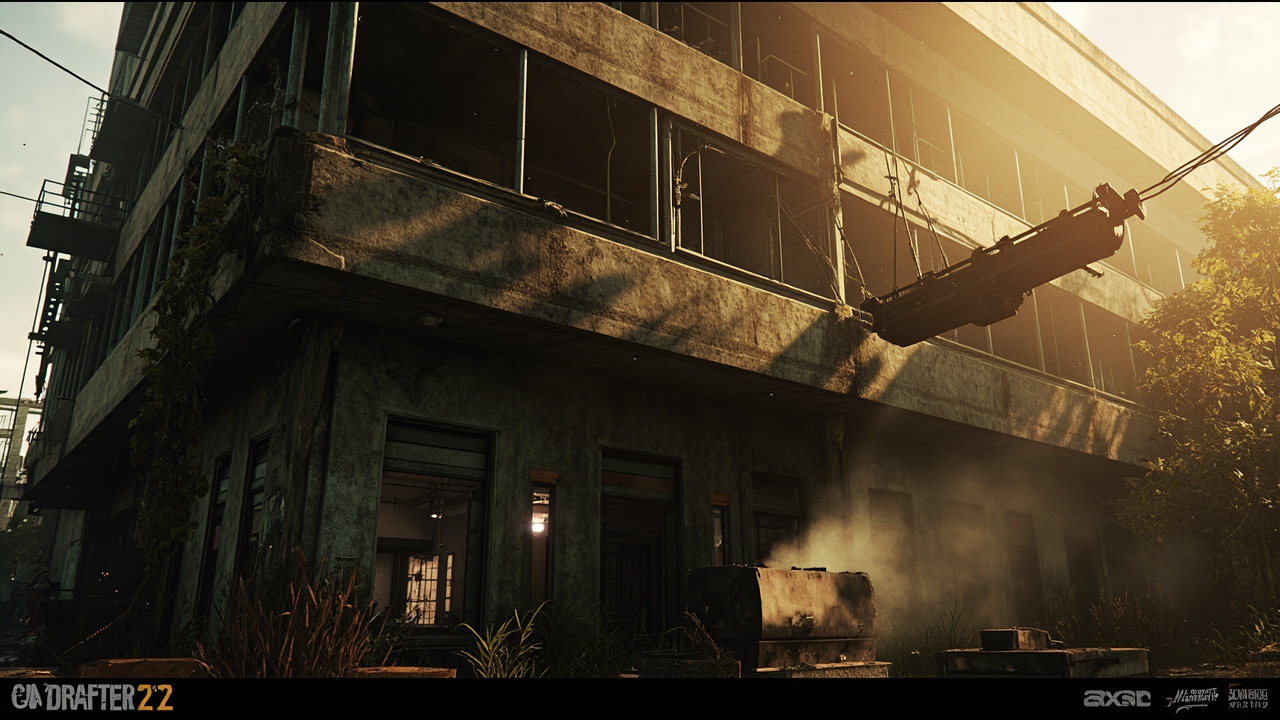
JKV employee access card in ARC Raiders: where to use it and what to expect
The JKV employee access card is a single-use key in ARC Raiders that points to one specific locked door on the Buried City map, and the in-game description does not tell you which point of interest to visit. Players who pick the card up during a raid often cycle through nearby buildings, lose the card on a bad run, or spend a chunk of a session combing a rooftop before realizing the door is one floor down. This guide walks through the door the card actually opens, the route to reach it without dying, what is worth looting inside, and how the card sits next to the other POI-based key cards in the game.
The aim is practical: where the card is used, how to get there, what containers to breach first, and how the loot compares to a normal Space Travel sweep. The same checklist works in squad play, because the door and the surrounding hot zone behave the same way if you are solo or running with two teammates.
What the JKV employee access card actually is
ARC Raiders is built around the idea that almost every interesting item on a map is locked behind a container, a door, or a code, and keys are the tool that links those two layers together. The JKV employee access card belongs to the small, lore-flavored subset of keys that open exactly one door each. Mechanically it is identical to other tier-one single-use keys: it occupies one inventory slot, it has no charge meter, and it disappears once the door is opened. Narratively it ties to J Kozma Ventures, a company that operated inside the Space Travel building on the Buried City map, which is the only reason the card exists in the game at all.
Because the in-game description does not name the target POI, most players rely on community wikis and guide databases to confirm where to use it. The ARC Raiders wiki entry on the JKV Employee Access Card is the cleanest single source for the door location and a summary of the loot pool, and the rest of this guide stays consistent with that page while adding extra production context for players who want to understand the design behind the key.
Where to use the JKV employee access card
The card is used at the Space Travel building, a multi-story office block on the Buried City map. The locked door is on the fourth floor, at the end of a hallway next to the northwestern stairwell. The stairwell itself is the easiest landmark to call out over voice chat, because every floor is clearly numbered and a teammate can confirm the level by sight rather than by counting landings. Once you know what to look for, the building is hard to confuse with the surrounding structures, even though Buried City has a few visually similar office blocks nearby.
For players who prefer to enter the building from above, the exterior wall carries a zipline that runs most of the building’s height. This shortcut is useful when the ground floor is contested, but it also forces you to enter from the roof and work your way back down, which means a longer walk back to the extraction point. New players are usually better off going through the stairwell, breaching the fourth-floor door, looting quickly, and leaving the same way they came in, because the route is shorter and the sightlines are easier to read.
Because the card is one-use and the building sits on a high-traffic POI, treat the trip as a timed event rather than a leisurely sweep. The door and the room behind it are clearly designed as a small risk-reward detour inside a larger raid, not as a standalone objective you can ignore for thirty minutes while you search other POIs on the map.
Step-by-step route to the locked door
The route is short, but each step has a tactical decision attached, so it is worth running the sequence in order before you load into Buried City. The list below assumes a standard mid-raid drop near the building; adjust the entry point if you spawn on the opposite side of the map.
- Drop into Buried City near Space Travel. Approach from the side of the building rather than the main street, so the door of the POI sits between you and the busiest sightline.
- Enter the building through the ground-floor access. Ignore the lower floors for now, because every container on the way up is a time cost you do not need for the JKV room.
- Take the northwestern stairwell. Each landing is numbered, which removes any guesswork about if you are on the third or the fourth floor.
- Follow the hallway from the top of the stairs. The locked door is along the northwestern wall, clearly distinct from the standard office doors in the rest of the building.
- Use the JKV employee access card on the door. The card is consumed and the door swings open; confirm the card icon has dimmed before you step inside.
- Loot the room, breach any sealed containers, and extract. Do not push deeper into Space Travel after the room is empty, because the rest of the building is regular POI loot with a much higher traffic cost.
If the door is already open on your run, the room is still worth a quick look. Other players will not always strip every container, and mechanical and electrical components are valuable enough that partial credit still beats walking past an opened room on the way to extraction.
What is inside the locked room
The locked room is a small office suite, not a vault, and the loot pool reflects that. The container list is short and predictable, which is useful when you are planning how long to spend in the room before extracting. The room is also clearly themed: desks, lockers, a breaker panel, and a small set of sealed crates that need a breaching tool to crack.
- Multiple mechanical components scattered on desks and in lockers.
- Multiple electrical components in wall-mounted cabinets and in a breaker panel on the far wall.
- Several sealed containers that need a breaching tool, which is the real time cost of the room.
- A weapon case with a chance of a mid-tier gun or mod.
- A raider cache that can hold cosmetic items, ammo, or rarer components.
The weapon case and the raider cache are not guaranteed to spawn good loot on every run, so the value of the room is mostly the components. For a player who needs parts for a base upgrade or a workbench recipe, the door pays for the card on its own, even if the case rolls poorly and the cache hands you nothing but a cosmetic.
Mechanical and electrical component economy
Components are the backbone of ARC Raiders’ mid-game progression, and the Space Travel room is one of the more reliable component sources on Buried City. Mechanical components feed weapon mods, vehicle parts, and several bench recipes, while electrical components feed electronics-tier upgrades and a handful of high-value craftables. Pulling a stack of each from a single door is meaningfully faster than scraping the same components across an entire run, which is why this card is treated as a high-priority pickup rather than vendor filler by most regular players.
When the door is open and the room is contested, the smart play is to grab whichever component stack is the smallest first, because the largest stack tends to draw the most attention from other looters. Components stack in your inventory, so a partial clear of a large stack still gives you a meaningful upgrade path even if you have to leave before the room is empty. There is no reason to leave components on the floor for a teammate who is already on extraction timer, and no reason to fight for the last few units of a stack when the stairwell is full of footsteps.
Why Space Travel is a hot POI
Space Travel sits in a dense part of Buried City, which means the path to the JKV door is rarely uncontested. The building has its own loot density, the surrounding streets are full of standard POI containers, and the rooftop is a popular sniper nest during longer raids. Any team that controls the roof or the top of the stairwell controls the door, which is why the JKV card is rarely used in silence. Even a quick entry leaves a noise footprint on the stairwell, and a careful looter has to weigh the value of the room against the value of staying hidden.
For a solo player, the best mitigation is to time the run for a quieter phase of the map. Mid-raid, when most squads are pushing other POIs, the stairwell is often clear. Early raid and late raid are both dangerous: early because every squad is still in the area, and late because the door’s loot is well known to experienced players who specifically camp it. If you are extracting with the card unused, consider stashing it rather than burning it on a forced push, because the card stays useful across runs and you can always bring it back on a quieter drop.
Solo versus squad play
The card behaves the same way regardless of squad size, but the optimal play changes with the people you bring. A solo player should treat the room as a quick grab, breach the closest containers, and leave through the stairwell they came in by. A two- or three-player squad has more options: one player can hold the stairwell while the others breach, or a player with a long-range rifle can sit on the roof to give the looter a few extra seconds of safety. Squad play also makes the exterior zipline more attractive, because one player can stay at the top with line of sight on the room’s doorway and call out any approach from the street.
The downside of squad play is shared loot. Components are not a contested resource inside a squad, but the weapon case and the raider cache are. Decide before the door opens who gets first call on the case, because arguing about a single roll in a contested POI is a common way for a clean run to turn into a wipe. A simple rule is to give the weapon case to the player who carried the long-range overwatch, and to roll the raider cache between whoever has space in their inventory. Readers who want more background on History of the Internet can use the History of the Internet while reviewing this point.
Common mistakes when using the card
Most failed JKV runs come from the same handful of mistakes. Avoiding them is usually more valuable than optimizing the route, because the route is short and the mistakes are expensive.
- Going to the wrong building. JKV is tied to Space Travel specifically, not to the wider Buried City skyline. Several nearby buildings share similar architecture, and a quick glance at the rooftop sign is worth the time before you commit to the stairwell.
- Spending too long breaching. Every container in the room has a breaching time, and stacking three breaching timers in a contested POI is a common way to lose the run to a third-party squad.
- Fighting for the room. The card is valuable, but it is not worth a prolonged gunfight. If another squad is already on the door, consider rotating to a different POI and saving the card for a quieter raid.
- Forgetting the stairwell landmark. Without the numbered landings, players often end up on the third or the fifth floor and waste a full minute of extraction timer finding the right door.
- Ignoring the zipline option. The exterior zipline is a real alternative, and refusing to use it because the stairwell feels safer is sometimes a mistake when the ground floor is held by another team.
How the card fits into the wider key ecosystem
The JKV employee access card is one entry in a much larger set of single-use and reusable keys in ARC Raiders. Single-use keys like this one are usually tied to a specific room with a specific loot profile, while reusable keys open multiple doors in the same category, such as security offices or maintenance rooms. Knowing which type you are holding changes how you plan a run, because a reusable key is worth a detour even if the first door is empty, while a single-use card is only worth the trip to its own door.
The table below compares the JKV card against a few of the most common categories of key in ARC Raiders, so you can see at a glance which loot profile and which risk level you are dealing with when you pick one up. The exact door counts and loot pools vary by season, but the category structure is stable enough to use as a planning reference.
| Key type | Example | Number of doors | Typical loot | Risk profile | Best used |
|---|---|---|---|---|---|
| Single-use company card | JKV employee access card | 1 | Components, weapon case, raider cache | High (hot POI) | Mid-raid in a quieter phase of Buried City |
| Single-use security key | Office master key (sample) | 1 | Ammo, mods, occasional cosmetic | Medium | When the matching door is on your route |
| Reusable security key | Security office key (sample) | Multiple security rooms | Mods, components, occasional weapon | Medium | Full loot sweep of a district |
| Reusable maintenance key | Maintenance pass (sample) | Multiple maintenance closets | Components, repair kits | Low to medium | Longer raids with a clear route plan |
| Quest-locked key | Faction-issued key (sample) | 1 (quest only) | Quest items, unique rewards | Variable | Only during the matching quest step |
The point of the comparison is simple: the JKV card is a focused, single-room reward with a known loot pool. Plan around the door, not around the wider POI, and the card will reliably pay for itself in components across a long session of Buried City raids.
Inventory and loadout considerations
Because the card occupies an inventory slot for the entire run, the rest of your kit has to be planned around it. A typical loadout for a JKV-focused run should leave room for the breaching tool, a stack of ammo, and at least one healing item, while still leaving two or three empty slots for the loot you are about to pick up. The room’s containers are dense, so an inventory that is full before you open the door will force you to drop components on the floor to make room for more components, which is the kind of waste the card is supposed to prevent.
A useful pre-raid checklist before you head to Space Travel:
- Confirm the JKV card is in your active keyring, not in your stash.
- Carry a breaching tool with at least three uses.
- Bring one long-range weapon if you are in a squad and plan to hold a sightline.
- Pack at least one healing item and a small stack of ammo for the most-used weapon.
- Leave three or four empty inventory slots for component stacks.
Designing around single-use keys: a development perspective
From a development perspective, the JKV employee access card is a clean example of how ARC Raiders layers information on top of a procedurally busy map. The card is intentionally vague about its target, which forces the player to look up the location, talk to other players, or learn the map by trial and error. Once the door is found, the loot is generous but not overpowered, so the card does not break the economy of a normal raid or push other POIs out of the rotation.
The trade-off is interesting for designers thinking about similar systems. A more discoverable key, with the POI name in the description, would reduce the friction for new players but would also remove the social layer that drives players to wikis, Discord channels, and squad chat. ARC Raiders leans into that social layer, which is one reason the JKV card is treated as a small milestone the first time a player uses it rather than as a routine errand, and why community guides stay useful long after the door is mapped.
For a studio thinking about a similar system, the design checklist is short and worth keeping in mind when scoping a key or access-card feature:
- Give every single-use key exactly one door and one loot profile, so the player knows what they are spending the slot on.
- Make at least some keys vague about their target, so the player has to engage with the world or the community to use them.
- Tie the key to a known landmark on the map, with a visible marker inside the building, so navigation is not a guessing game once the player knows where to look.
- Calibrate the loot so the key is worth the trip but does not dominate the surrounding POI’s value.
- Keep the door inside a higher-traffic area, so the key is a small risk-reward detour rather than a free chest in the middle of nowhere.
Once the door, the route, and the loot are documented, the card becomes a small predictable investment rather than a mystery, and a good design gives the player both experiences: the first-use discovery and the routine follow-up on later runs.
Troubleshooting: what to do if the door is missing
Because Buried City is a shared map, several things can go wrong even when the player does everything right. The table below covers the most common failure modes and the simplest response for each, based on what other players report after a clean run and a confused one.
| Symptom | Likely cause | What to do |
|---|---|---|
| Door is already open and the room is empty | Another squad used the card earlier in the raid | Rotate to a different POI and save the card, or check for missed components on the floor |
| Card is gone from inventory | It was used in a previous run and consumed | Confirm in the keyring, then refarm the card on a future run |
| Cannot find the fourth floor | Stairwell was mistaken for a service ladder | Look for the numbered landing markers and use the marked stairwell, not a maintenance ladder |
| Stuck on the third floor | Wrong building chosen, similar architecture | Drop down, verify the rooftop sign reads Space Travel, and re-enter through the main stairwell |
| Room is looted but a container is still sealed | Out of breaching charges | Leave the sealed container for a follow-up raid, since the room is a one-time reward per card |
| Card consumed but door still locked | Visual glitch on the door panel | Reload the nearby interact prompt, or move a few meters away and back to refresh the door state |
Comparing the loot against nearby POIs
Space Travel sits among other high-value POIs on Buried City, and the JKV room is best understood as a multiplier on the building’s normal loot rather than a replacement for it. The table below shows how the room’s loot compares with the building’s regular containers and with the surrounding POI rotation, so you can decide whether the JKV run is worth a full raid or just a side trip on the way to a different objective.
| Loot source | Container density | Components per run | Weapon case chance | Other notable drops |
|---|---|---|---|---|
| JKV locked room | Low (small office suite) | High, with a focus on mechanical and electrical | Yes (one guaranteed case) | Raider cache with cosmetic or ammo rolls |
| Space Travel main floors | Medium to high | Medium, mixed component types | No | Mods, ammo, common cosmetics |
| Surrounding Buried City POIs | Variable | Low to medium | Rare | Standard POI rotation loot |
The takeaway is that the JKV room is a targeted component run, while the rest of the building and the surrounding POIs are a broader sweep. A balanced raid uses the card for the room, then either continues through the building or extracts depending on the timer and the squad’s appetite for risk.
Quick reference card
For players who want the shortest possible summary, the following list compresses the guide into a single printable block. Tape it next to your monitor if you run the card often, or keep it open on a second screen while you load into Buried City.
- Where: Space Travel building, Buried City map.
- Floor: fourth floor, in a hallway off the northwestern stairwell.
- How to reach: stairwell with numbered landings, or exterior zipline from the roof.
- Card behavior: single-use, consumed on door open.
- Main loot: mechanical and electrical components, plus a weapon case and a raider cache.
- Best timing: mid-raid, in a quieter phase of the map.
- Best squad: small squad with one looter and one overwatch player.
Closing notes on the JKV card
The JKV employee access card is a small, well-scoped reward in ARC Raiders: one door, one room, a clean loot profile, and a clear route. The room is a useful mid-raid detour for any player who needs components, and the design is a tidy example of how a single-use key can carry its weight inside a larger map. For players running the route for the first time, the practical reference worth bookmarking is the ARC Raiders wiki page that documents the door’s exact location and the loot inside, because the in-game description deliberately leaves that information out. Once the stairwell becomes familiar, the card drops into the same mental category as any other planned detour: load in, climb, breach, extract, repeat.
Most players who run the card regularly settle into a simple loop. They check the keyring before the drop, land near Space Travel, take the northwestern stairwell to the fourth floor, breach the room, and extract before the stairwell fills with other squads. The card is not a run-defining objective, and it is not meant to be one. It is a small, predictable return on a single inventory slot, and that predictability is exactly why it stays useful across a long season of Buried City raids.
Frequently asked questions
Where is the JKV employee access card used in ARC Raiders?
The card is used on a locked door on the fourth floor of the Space Travel building on the Buried City map. The door is at the end of a hallway next to the northwestern stairwell, which is clearly marked with numbered landings.
Does the JKV card tell you which building to go to?
No. The card description does not name the target point of interest, so most players confirm the location through a guide, a wiki, or squad knowledge. The Space Travel building is the only building where the card has an effect, and the in-game text does not hint at that directly.
Is the JKV card single-use or reusable?
It is a single-use key. Once you use the card on the fourth-floor door, the card is consumed and the same key cannot open the door a second time on the same account. A new card has to be found on a future raid if you want to run the room again.
What loot is inside the locked room?
The room contains multiple mechanical and electrical components, a few sealed containers that need a breaching tool, a weapon case, and a raider cache. The components are the most reliable reward, and the case and cache are variable on every run depending on the loot table roll.
Can the room be opened by more than one player?
Only one player needs the card to open the door. Once the door is open, every player in the raid can enter and loot the room normally, but the loot is shared between the squad and each container only drops once.
Is Space Travel a dangerous POI for this card?
Yes. Space Travel is a high-traffic POI on Buried City, and the rooftop and stairwell are common sightlines during longer raids. A solo player should aim for a quieter phase of the map, and a squad should consider holding the stairwell while the looter breaches the room.
What if I die with the card still in my inventory?
The card stays in your persistent keyring and is not lost on death. You can pick it up again on the next raid from the same keyring slot and try again when the route is clearer, and the card does not despawn between raids.
Can I use the card from the roof instead of the stairwell?
Yes. There is a zipline on the exterior wall that can drop you near the top floor, and from the roof you can work your way back down to the fourth-floor door. The zipline is faster, but it forces you to enter from above, which means a longer walk back to extraction and a different set of sightlines to watch.
Is the JKV card worth using in a squad?
Yes, but coordinate before opening the door. The components are not contested inside a squad, but the weapon case and the raider cache are. Decide who gets first call on those two containers before the door opens, so the loot does not become a source of friction in a contested POI.
How does the JKV card compare to other single-use keys in ARC Raiders?
It is on the higher-value end of single-use keys because the loot pool is dense and the components are immediately useful. Cheaper single-use keys tend to open smaller rooms with fewer components, and quest-locked keys usually offer unique rewards tied to a specific quest step rather than to general progression.





Leave a Reply