


Colorful screws legends za: what trainers actually need to know
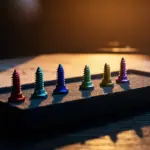
A new currency that arrives in a long-running franchise is rarely just a number. It becomes a small design choice that the development team has to balance against everything else the player is doing at the same time. Colorful screws in Pokémon Legends Z-A follow that pattern. The item shows up in the overworld as a small, distinctive crafting part, the kind of object that quietly influences how a trainer allocates time, which orders they accept, and how they read the local economy. Players who treat the screws as a generic material tend to spend them on the first thing that looks interesting. Players who understand the design intent tend to slow down, plan a build, and come out ahead. This guide is written for the second group, with an eye toward the production and design reasoning that explains why the screws feel the way they do.
The trick with a short, memorable currency is that the name carries more weight than the number on the screen. A standard Pokédollar transaction is anonymous. A screw transaction is not, because screws are visibly part of an object. That visible identity is what the development team leaned into when it designed the part economy around Pokémon Legends Z-A’s urban setting. Trainers see the screws in a vendor’s tray, see the same shape on a finished item, and form a mental link between the two. Once that link forms, the screws stop feeling like cash and start feeling like inventory. The shift from cash to inventory is where most planning mistakes are made, because inventory is harder to replace.
How the part fits into Pokémon Legends Z-A’s crafting system
Pokémon Legends Z-A moves the franchise toward a more action-driven, real-time structure, but the supporting economy still uses material components in a familiar way. Colorful screws occupy a specific tier in that economy. They are not starter parts, and they are not the rarest crafting component in the game. They sit in a middle band that the design team can tune without breaking either the early game or the late game. The first hour of play introduces a smaller set of basic parts. The midgame opens up recipes that ask for screws. The late game treats the same screws as a steady pacing tool rather than a sudden gate, because the supply grows but the recipes do not always match that growth.
Trainers who are used to a pure material sink should reset that expectation. A screw is closer to a class of part than a single ingredient. The color of the screw is not cosmetic flavor. Each color is shorthand for a sub-recipe inside a larger item. A blue screw means one part of a build, a red screw means another, and so on. The recipe screen surfaces that through small color icons, which is why the design team chose a name that highlights the color rather than the function. The name is the entire UI. Once a trainer reads it, the recipe is already half-explained.
The role of color coding in player decision making
Color coding is one of the oldest tools in game design. It works because human vision separates hue faster than it separates shape. When a recipe asks for two blue screws and one red screw, the player does not need to read the description again to remember the order. The mental image of two blues and a red does the work. The designers of Pokémon Legends Z-A are using that effect on purpose, and the color palette is chosen to stay legible in a wide range of lighting conditions, including the darker indoor scenes that the title occasionally uses for narrative beats.
There is a secondary effect that the design team benefits from, and it is worth understanding. Color coding also makes the wrong choice feel obvious. If a trainer reaches into the wrong tray and grabs a yellow screw when the recipe calls for green, the visual mismatch is immediately visible. The player catches the mistake without leaving the menu. That small correction loop is what keeps the crafting system feeling fair. Without it, screw selection would devolve into repeated trips back and forth between the vendor and the workbench. The team has built the legibility directly into the icon, and the player benefits from it on every transaction.
Where colorful screws appear in the world
The supply of colorful screws is intentionally fragmented. Trainers find them in three main sources, and each source has a different rhythm. The first source is the open world, where screws appear in small clusters attached to scavenging nodes. These nodes respawn on a timer, which means that a dedicated trainer can plan a route, run it, and accumulate a small but steady income. The second source is the reward track for in-city activities, including the order boards that the game uses to structure its missions. The third source is a smaller trickle of guaranteed screws from progressing the main story. None of the three sources are large on their own, but they overlap during a typical session, which is what gives the part its feeling of abundance without making it feel cheap.
Trainers who optimize for any single source end up frustrated, because each source has a cap. The scavenging nodes run out within a few in-game hours. The order board rotates its rewards on a daily cycle. The story unlocks are paced to match the campaign rather than the player’s crafting ambition. The combined system only feels generous when a player mixes all three. That is not an accident. It is the same balance pattern that long-running crafting systems in other genres use to keep a mid-tier material relevant without dominating the economy.
How to read the recipe screen like a production designer
Production designers read a crafting screen in layers. The first layer is the headline recipe, the one that tells the player what item they are about to build. The second layer is the cost panel, which lists the parts and quantities. The third layer is the metadata, which surfaces the time, location, and any side effects. The colorful screws interface in Pokémon Legends Z-A uses the same three layers, and the screws are always in the second layer. That placement is meaningful. Anything in the cost panel is something the player has to plan around, not something they can ignore. Anything above it is intent. Anything below it is consequence. The screws live in the planning layer, which is why a careful player reads the panel first and the headline second.
That reversed reading order is the single biggest performance gain a new player can make. The headline tells you what you are building. The cost panel tells you whether you can afford to build it today. The metadata tells you whether the build is worth your time relative to the rest of your session. When those three answers line up, the player commits. When they do not, the player walks away. Walking away is also part of the design. The game does not want a trainer to spend all of their screws in one sitting and then have nothing to work with for the rest of the week. A patient player is a player who keeps coming back, and a patient player is exactly what a live-titled design needs.
The pacing math behind the colorful screws economy
Behind every visible currency, there is a pacing math that the design team does not show the player. Colorful screws follow a known pattern. The player earns at a roughly linear rate during the early game, which feels generous. The earn rate flattens in the midgame as the recipes grow more complex. The late game releases a small set of high-yield sources, but each one asks for a specific action, like finishing a particular side activity. The result is a curve that climbs steadily but never spikes, and that curve is what gives the game its pacing rhythm. A spike would let a player race ahead and burn the entire economy in a single week. A flat curve would let the player ignore the screws and still complete the build. The chosen curve sits between those two extremes, which keeps the screws relevant without making them a chore.
For a player, the practical lesson is that pacing math is friendly to routine. The player who sets a small daily goal, such as clearing a single scavenging route or finishing one set of city orders, will end the week with a usable stockpile. The player who waits for a moment that feels right will often find the stockpile empty. This is not because the game punishes waiting. It is because the economy is tuned around consistent participation, and the design team can defend that decision by pointing to the play data they expect to see after launch. The screws are a pacing instrument, and the player benefits from playing them like one.
Common mistakes trainers make with colorful screws
The mistakes are consistent enough that the development team can probably predict them on the first day of live operation. The first mistake is the impulse craft, where a player builds the first thing they can afford just to see the new item on screen. The animation is satisfying, the item looks good in the inventory, and the player feels a small reward. A few hours later, the same player realizes that the item they crafted is not the one their team actually needs, and they have to grind for the parts again. The fix is simple. Open the team planning screen, decide which slot the new item will fill, and only then walk to the workbench.
The second mistake is the color conflation, where a player assumes that two screws of similar color are interchangeable. They are not. The recipe screen uses a fine-grained palette, and the difference between a deep blue and a teal screw is the difference between a working build and a stuck one. A careful player will read the recipe color twice before opening the storage tray. The third mistake is the bank trap, where a player hoards screws against a future recipe that may never come. Hoarding is psychologically comforting, but it is also a way to lose access to the parts in the short term. The screws do not earn interest. The recipes rotate. A small, intentional spend is usually a better choice than a large, defensive save.
Comparing colorful screws with other mid-tier currencies
Players who have spent time in other crafting-heavy games already recognize the pattern that colorful screws fit into. The table below compares the design intent behind several well-known mid-tier currencies. The numbers are illustrative rather than measured, because the actual values in each title are tuned to that title’s pacing. The point of the table is to show how the screws sit relative to familiar systems, and to help a reader transfer the intuition they already have from one game to another.
| Currency | Source rhythm | Sink type | Player friction | Color or identity cue |
|---|---|---|---|---|
| Colorful screws in Pokémon Legends Z-A | Mixed: world nodes, orders, story | Mid-tier recipe parts | Low to medium | Strong, multi-hue |
| Iron in a generic survival game | Single: mining nodes | Tool and weapon upgrades | Medium | None, monochrome |
| Upgrade components in a long-running RPG | Single: monster drops | Equipment enhancement | High, gated by drop rate | Rarity tier, not color |
| Tokens in a seasonal event | Single: event activities | Cosmetic shop | High, time-limited | Strong, themed |
| Region-specific crafting parts | Mixed: regional drops and quests | Local upgrades | Medium, region-locked | Region-themed |
The comparison shows that colorful screws are unusual in the strength of their visual identity. Most mid-tier currencies rely on a name or a rarity tier to communicate what they are. The screws communicate through color first and name second. That choice is friendly to players who do not want to read every tooltip, and it is friendly to the developers, because the UI can stay compact without losing meaning. The downside is that the color palette has to stay legible across all the scenes in which the screws appear. If the design team slipped on that, the screws would lose their main advantage, and the system would fall back to the same tooltip-heavy design that the color cue was meant to replace.
How a player can plan a week around the screws
Planning around the screws does not need to be elaborate. A small set of habits is enough to keep the stockpile in a healthy range without consuming the player’s evening. The list below is the routine that fits the design intent most closely. It treats the screws as a pacing instrument, which is the same role the developers gave them.
- Open the recipe screen before the first scavenging route of the day, and decide which item the run is funding.
- Finish one set of city orders before visiting the workbench, because the order rewards include screws and the workbench tends to spend them.
- Check the storage tray once per session rather than once per recipe, because the storage screen is the only place where the color palette is fully visible.
- Cap the daily spend at one major build, because two major builds in a single session usually drains the week’s reserve.
- Save the late-game high-yield sources for the items that actually need them, rather than spending them on the first attractive option.
The routine is short, and the routine is enough. The design of the screws rewards consistency rather than effort, and a player who builds the habit will rarely feel stuck. A player who breaks the routine will often feel stuck, even if their per-hour earn rate is identical to a more disciplined neighbor. That feeling is the same one that every pacing-based crafting system creates, and the screws version of it is no different.
When to spend, when to save, and when to ignore
The decision to spend a screw is rarely a single moment. It is the last step in a chain that includes a recipe choice, a build choice, and a session choice. A player who wants to think like a production designer will slow each step down and check the next step before committing. The framework below is a small decision matrix that fits on a single screen. It is not a rule, because rules in crafting systems tend to break the moment a new patch lands. It is a habit of thought, which is more durable than a rule.
| State of the player | Visible signal | Recommended action | Why |
|---|---|---|---|
| Full stockpile, no planned build | Storage tray shows surplus in every color | Hold for one session, then recheck | Saving against a future recipe is cheaper than a panic grind |
| Empty stockpile, mid-session | Storage tray shows near-zero in target color | Stop crafting and switch to a scavenging route | Continuing to craft would burn time on a partial build |
| Stable stockpile, active story beat | Recipe screen and storage tray both readable | Spend on the story-relevant item | Story beats reward commitment, and the build will be used soon |
| Patch day, supply shifted | Recipe screen shows new sources for familiar items | Pause and reread the patch notes | New sources can change the optimal daily routine |
| Late game, surplus of one color | Storage tray shows imbalance across colors | Trade or convert through the city vendor | Imbalance is the most expensive state to leave alone |
The matrix looks elaborate, but the underlying pattern is short. Read the recipe, read the storage, read the session plan, and only then spend. The order matters more than the rule, because the order is what protects the player from the moment when two of the three readings disagree. When the readings agree, the player commits. When they disagree, the player walks. The screws are designed to reward that discipline, and the design holds up because the developers have kept the readings legible.
How the screws interact with the rest of the team
A build in Pokémon Legends Z-A is not a single item. It is a small set of items spread across a team, and the screws feed into that set in proportion to the team’s needs. A trainer who runs a single focal creature will spend most of their screws on that creature’s equipment. A trainer who runs a balanced team will spread the screws across several recipes, and the storage tray has to be organized to support that spread. The game does not force the player to organize, but a disorganized tray will quietly cost time on every transaction. The few minutes spent sorting the tray at the start of a session pay back across the rest of the session.
For players who are curious about how the screws compare to other crafting systems across the wider genre, the broad design of crafting-driven parts is documented on the franchise hub page for Pokémon Legends on Wikipedia. The page covers the family of titles, including the structural choices that the development team has carried forward, and the framing there is useful for understanding why a mid-tier component like the colorful screws fits the overall direction. For trainers who want to compare a specific screw recipe against the broader set of available parts in the current version of the game, the official item index is the more authoritative source, and it lives on the developer’s documentation site at pokemon.com’s Pokémon Legends Z-A page, which provides useful background for this point. The two references are not substitutes, and the design team expects players who care about the screws to use both.
Reading the screws as a UI design choice
It is worth treating the colorful screws as a small UI study, because the design decisions behind them are visible in every menu. The first decision is the name. A descriptive name, like crafting part type B, would be honest but unmemorable. A poetic name, like Lumiverdant pin, would be memorable but unclear. The chosen name sits in the middle. It tells the player exactly what the object looks like, which is enough to anchor the item in memory. The second decision is the icon. The icon uses a screw silhouette rather than a generic item silhouette, which gives the player a useful mental model of the object before they pick it up. The third decision is the placement on the storage screen. The storage screen groups by color first and quantity second, which mirrors the recipe grouping and reduces the visual gap between the two screens.
These three decisions, taken together, are what make the screws feel like a coherent system rather than a random ingredient. A player who notices them will see the same pattern repeated across other parts of the game, and the recognition will transfer. A player who does not notice them will still benefit, because the design is doing the work in the background. That is the highest compliment a UI design can earn, and the screws seem to be earning it from the first hour of play.
Why the screws are a useful study for a GameDev reader
For a reader who works in game development, the colorful screws are interesting for what they reveal about mid-tier currency design. A first-tier currency has to feel generous. A second-tier currency has to feel rare. A mid-tier currency has to do both without tipping into either role, and that balance is hard to strike. The screws are a small, readable example of the pattern. They are visible to the player, they are tunable for the developer, and they are easy for an outside reader to study without access to the underlying telemetry. The pattern shows up in many other titles, and the screws are a useful reference point when a development team needs to design or audit a similar system of their own.
The pattern also shows up in the team’s broader approach to player progression, which is part of the reason the franchise has a documented design lineage. The Wild Zone 2 encounters and layout guide for the same title is a useful companion read, because it shows how a different in-game resource is paced against the same campaign structure. The screws fit into that pacing in a way that the Wild Zone guide makes visible, and a reader who wants the full picture can use both pieces to build a model of how a single title’s resources interact. That kind of cross-reference is what makes a single currency worth a guide rather than a footnote.
A short checklist for trainers who want to use the screws well
- Open the storage tray before opening the recipe screen, so the player knows their true stock before they commit.
- Plan one major build per session, because two major builds tend to drain the week.
- Mix the three main sources each session, because no single source sustains a player on its own.
- Respect the color palette, because the palette is the design’s main communication channel.
- Walk away from the workbench when the readings disagree, because a second pass is cheaper than a wasted craft.
The list is short on purpose. A short list is easier to remember, and the screws are simple enough that a long list would be padding. The design team has kept the system small, and a careful player can match that simplicity with a small set of habits.
Frequently asked questions
What are colorful screws in Pokémon Legends Z-A used for?
Colorful screws are a mid-tier crafting component used to build specific items. Each color maps to a different part of a recipe, and the recipe screen surfaces the mapping through small color icons. They are not the rarest part in the game, and they are not the most common. They sit in the band where most of the active building happens, which is why a steady supply matters more than a one-time windfall.
Where do trainers get colorful screws?
The screws come from three main sources. The first is the world, where they appear in small scavenging nodes that respawn on a timer. The second is the order boards in the city, which reward screws alongside other materials. The third is the main story, which releases a small, paced trickle of screws as the campaign advances. Trainers who mix all three sources in a typical session will see a healthy stockpile, while trainers who rely on only one source will feel capped.
Do different colors of screws mean different things?
Yes. The color is shorthand for the sub-recipe inside a larger item. A blue screw feeds one part of a build, a red screw feeds another, and so on. The colors are not interchangeable, and the recipe screen uses a fine-grained palette. A trainer who treats similar colors as the same will run into builds that stall at the workbench. A trainer who reads the recipe color twice will rarely run into that problem.
Can a trainer trade colorful screws with other players?
The design team treats the screws as a single-player pacing tool, and the in-game vendors are the intended conversion path. The frame around the trade economy can shift with patches, so the official item index is the source a trainer should trust for the current behavior.
Should a trainer save colorful screws for late-game recipes?
Saving is rarely the best use of a mid-tier currency. The recipes rotate, and the screws do not earn interest. A small, intentional spend is usually a better choice than a large, defensive save. A trainer who holds the screws indefinitely tends to end the patch with a full tray and a build that never got finished, which is the worst outcome for a pacing-based system.
How do the screws compare to other crafting components in the same game?
The screws are a mid-tier component. They are more visible than the basic starter parts, because the color cue carries most of the work. They are less rare than the top-tier components, which are usually tied to specific story beats or rare encounters. The result is a part that the player sees often and uses often, which is the design intent.
Do the screws change after a patch?
The pacing math behind the screws is tuned at the data level, which means that a patch can change the supply or the recipe cost without changing the item itself. A trainer who wants to keep their daily routine accurate should reread the patch notes whenever a new version lands, because the new notes will surface the kind of supply or cost adjustment that the storage tray alone will not reveal.
Is there a way to convert surplus screws into a missing color?
The city vendor offers a small conversion path for screws that the player has in surplus. The conversion is not free, and the rates are tuned to discourage the player from leaning on it as a primary source. It is a safety valve for an imbalance, not a strategy. A trainer who notices a growing imbalance should still try to fix it at the source, by adjusting the routes and orders that feed the over-represented color.
Why did the design team choose screws as a crafting part?
The screw silhouette carries a useful mental model. It tells the player that the item is a part, not a finished product, and the color cue tells the player which kind of part. The combination is compact, legible, and easy to remember. The same effect could be achieved with a different silhouette, but the screw is a familiar shape in real life, and the design benefits from that familiarity.
What is the simplest habit a new trainer can build around the screws?
The simplest habit is to read the recipe screen before opening the storage tray. The reversed order protects the player from the impulse craft, which is the single most common mistake. Once the habit is in place, the rest of the routine falls into place around it, and the weekly pacing usually takes care of itself.



Leave a Reply