

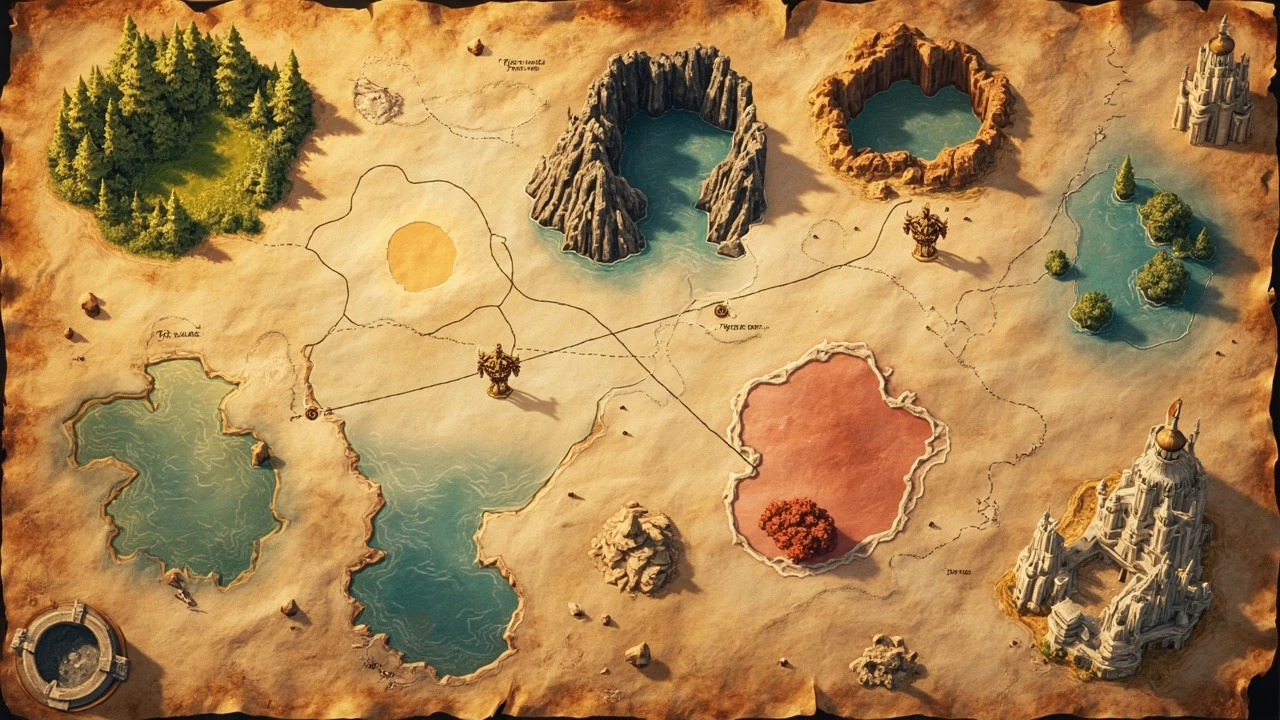
Silksong flea locations: a developer-grade walkthrough of every rescue in Hollow Knight Silksong
Fleas are the small, frantic wanderers stitched into the world of Hollow Knight: Silksong. The first one stumbles into Hornet on the road into the Citadel gates, and from that moment the game’s map turns into a chain of small rescues. Each Flea is not just a collectible; each is a citizen who eventually returns to a single growing settlement called The Fleatuary, and the settlement itself only grows when players bring wanderers home. Silksong flea locations therefore matter twice: they are scattered content, and they are the spine of a long-term unlocks system that gates the strongest mid-game upgrades.
What the Flea system actually does for the player
The Flea system looks like a side activity on the surface and a soft progression track underneath. Each Flea found, freed, or trapped and released in the world adds one citizen to The Fleatuary, which is a small, persistent camp that unlocks as players progress. The camp becomes the real reason to collect. Each citizen contributes a passive service, a quest, or a craft, and the number of citizens present at any moment controls which services are available.
Understanding the design intent of the loop is useful for any player planning a route. The developers chose to tie small rescues to permanent unlocks, which mirrors how the first game used Grubs, but pushed the idea further by letting each Flea produce ongoing economic and combat value. Finding the Flea is half the work. Returning it to a safe environment is the other half.
The three classes of Flea encounter
Fleas appear in three distinct formats across the map, and the format changes the rescue method.
- Free Fleas are wandering in the open world. They are usually trapped, caged, or simply lost in a dangerous room. A simple interaction or a small environmental puzzle frees them.
- Trapped Fleas are inside breakable containers, sealed cages, or guarded rooms. The encounter becomes a tiny combat or platforming puzzle before the rescue.
- Hunting Fleas are tied to a quest giver. The player is asked to defeat a specific enemy, escort a traveller, or perform a small task. These Fleas do not reward the player with a single tap; they reward a small completed loop.
Recognising the type early tells the player whether to expect a free pickup, a fight, or a quest detour. That single piece of information determines how much inventory to bring.
Why The Fleatuary matters for progression
The Fleatuary is more than a scenic camp. Each Flea who returns unlocks one of several categories of service:
- Crafting – the Flea who runs the vendor stall unlocks basic materials exchange once a threshold is reached.
- Rest – a few specific Fleas restore resource meters when the player sits at the camp bench, which turns The Fleatuary into a soft checkpoint.
- Quest hooks – certain Fleas trigger side stories that are only available once that citizen is home.
- Map expansion – the Cartographer Flea contributes map fragments in a wider radius than the player can reach on foot.
The result is a system where the number of Fleas found is a soft cap on the number of mid-game services available. Players who push the Flea count above 15 begin to see overlapping services, while players below 10 will need to revisit The Fleatuary more than once to unlock specific tools. Knowing this, it is sensible to plan a single sweep through the early regions once the player has the relevant traversal tool, rather than wandering the map ten times.
Region-by-region map of every confirmed Flea
The table below lists every confirmed Flea encounter in Hollow Knight: Silksong, grouped by region. The numbering is a working rescue order, not an official index. Players can follow it as written or skip ahead; the only hard requirement is that each Flea must be alive when they reach The Fleatuary, because dead or missed Fleas are not re-spawned by bench sitting.
| # | Region | Sub-area | Encounter type | Access requirement | Reward at The Fleatuary |
|---|---|---|---|---|---|
| 1 | Mosslands | Hunter’s March | Free Flea (wanderer) | None | Vendor Flea (basic materials) |
| 2 | Mosslands | Bone Bottom path | Trapped Flea (cage) | None | Cartographer Flea (wider map reveal) |
| 3 | Mosslands | Deep Dens | Trapped Flea (combat) | Drifter’s Cloak | Rest Flea A (small heal) |
| 4 | The Marrow | Upper tunnels | Trapped Flea (breakable jar) | Drifter’s Cloak | Quest: Lost Pendant return |
| 5 | Far Fields | Bellway junction | Free Flea (merchant trail) | None | Quest: Pilgrim’s rest |
| 6 | Far Fields | West road | Hunting Flea | Silk Soar | Reward: 80 Rosaries |
| 7 | Far Fields | Skull Rock ledge | Trapped Flea (cage over pit) | Silk Soar | Quest: Bone Trinket trade |
| 8 | Greymoor | Steel settlement | Free Flea (open room) | Clawline | Cartographer Flea B (extended reach) |
| 9 | Greymoor | Central furnace | Trapped Flea (timed encounter) | Clawline | Quest: Furnace repair |
| 10 | Greymoor | Lower mine | Hunting Flea | Clawline + Silk Soar | Reward: Forge Key |
| 11 | Wormways | First vertical shaft | Trapped Flea (wall cage) | Clawline | Rest Flea B (full heal) |
| 12 | Wormways | Tail chamber | Free Flea (rescue NPC) | Clawline + Silk Soar | Vendor Flea B (advanced materials) |
| 13 | Wormways | Hidden alcove | Trapped Flea (puzzle) | Needle Strike upgrade | Quest: Cartographer’s Errand |
| 14 | Shellwood | Thorny gate | Free Flea (merchant trail) | Drifter’s Cloak | Vendor Flea C (rare materials) |
| 15 | Shellwood | Deep root | Trapped Flea (root cage) | Clawline + Silk Soar | Quest: Shellwood Sap trade |
| 16 | Shellwood | Canopy shrine | Hunting Flea | Needle Strike upgrade | Reward: 120 Rosaries + Trinket |
| 17 | Bellhart | Bell tower base | Free Flea (civic rescue) | None (after Bellhart opens) | Civic Flea: Town Watch |
| 18 | Bellhart | Bell tower interior | Trapped Flea (bell cage) | Clawline | Rest Flea C (resource restore) |
| 19 | Bellhart | Bell tower peak | Hunting Flea | Clawline + Silk Soar + Needle Strike | Reward: Crest Fragment |
| 20 | Sands of Karak | Upper dune | Free Flea (desert wanderer) | Clawline | Vendor Flea D (trinket vendor) |
| 21 | Sands of Karak | Buried vault | Trapped Flea (sand cage) | Clawline + Silk Soar | Quest: Lost Caravan return |
| 22 | Sands of Karak | Glass ruin | Hunting Flea | Needle Strike upgrade | Reward: Glass Crown Trinket |
| 23 | Coral Tower | Sea entrance | Free Flea (wreck diver) | Clawline | Civic Flea: Diver’s Guild |
| 24 | Coral Tower | Lower coral garden | Trapped Flea (coral cage) | Clawline + Silk Soar | Rest Flea D (mid heal) |
| 25 | Coral Tower | Outer reef | Hunting Flea | Needle Strike upgrade + Clawline | Reward: Reef Pearl |
| 26 | The Slab | Prison block | Trapped Flea (cell) | Silk Soar | Quest: Convict’s freedom |
| 27 | The Slab | Upper ward | Free Flea (guard escort) | Clawline + Silk Soar | Civic Flea: Warden’s Office |
| 28 | The Slab | Guardroom | Hunting Flea | Needle Strike upgrade | Reward: 200 Rosaries + Key |
| 29 | Citadel (under) | Engineer’s annex | Free Flea (engineer) | Clawline + Silk Soar | Quest: Engineer’s apprenticeship |
| 30 | Citadel (under) | Storage vaults | Trapped Flea (crate) | Clawline | Vendor Flea E (tool vendor) |
| 31 | Citadel (under) | Lower platform | Hunting Flea | Clawline + Silk Soar + Needle Strike | Reward: Citadel Trinket Set |
The list of 31 is not a hard cap. The development team has stated that the Flea roster is intended to be the most extensive side-collectible roster in the game, and additional Fleas are added as the player pushes into late game regions. Players who want a full count should plan a second pass once they have the late-game traversal tool, because several Fleas in the upper Citadel are gated behind a wall break that the early game cannot perform.
Early-game Flea route: the first eight encounters
The first eight Fleas are the only ones most players will find in the opening act. They are the ones that teach the system. Each one introduces a different mechanic: a free pickup, a cage that drops on hit, a Flea who asks the player to do something, a Flea who only appears after a quest step, and a Flea who is locked behind a movement ability.
1. Hunter’s March wanderer (Mosslands)
The first Flea is the one who stumbles into Hornet on the road. There is no puzzle and no fight. The player simply approaches, listens to the dialogue, and the Flea runs toward The Fleatuary. The reward is the basic materials vendor. The reason this Flea exists as the first encounter is to teach the player that rescued Fleas do not stay around; they go home.
2. Bone Bottom path (Mosslands)
Directly above the Bone Bottom bench, a Flea is trapped in a small cage suspended over a moss pit. The cage is one hit from Hornet’s needle, and the Flea inside is grateful. The unlock is the cartographer service, which means the player can now see further on the map. The cartographer is a strong second unlock because it reduces the cost of missed content for the rest of the run.
3. Deep Dens (Mosslands)
Once Drifter’s Cloak is acquired, the player can drop into Deep Dens, where a Flea is trapped in a small chamber surrounded by aggressive Mossgrubs. The combat is short, and the Flea is the first to provide a heal. The placement teaches the player that the system rewards combat clears as well as exploration.
4. The Marrow upper tunnels
Inside the upper tunnels of The Marrow, a Flea is sealed inside a hanging glass jar that shatters on a downward strike. The encounter teaches timing rather than combat. The Flea returns to The Fleatuary and starts the Lost Pendant quest, which sends the player back to Bone Bottom to deliver a small item to a different NPC.
5. Far Fields Bellway junction
Once the player steps off the Bellway station for the first time, a Flea runs past them. The Flea does not stop, does not ask for help, and does not reward a chase. If the player chooses to follow, the Flea runs to a small alcove and waits. The reward is the Pilgrim’s Rest quest, which is a tiny chain that returns the player to The Fleatuary with a small trinket. The encounter teaches the player that the world is full of small, optional kindnesses.
6. Far Fields west road
After Silk Soar is unlocked, the player can climb to the top of the Far Fields west road, where a Hunting Flea asks the player to defeat a small pack of flying Skulls. The fight is optional but the Flea is grateful enough to hand over 80 Rosaries. The placement teaches the player that quests have a small but real cost in time.
7. Skull Rock ledge (Far Fields)
Across the bridge from west road, on a small isolated ledge, a Flea is caged above a long drop. The cage must be destroyed from below, and the Flea falls into the world. The Bone Trinket trade chain is the longest of the early-game quests, and it teaches the player that some Flea rewards are not single items but small quest triggers.
8. Steel settlement (Greymoor)
The first Greymoor Flea is a free wanderer in the steel settlement. The Flea is not trapped; the Flea is just lost. Once freed, the Flea unlocks an extended cartographer radius, which makes the rest of the early mid-game map a great deal easier to read. The placement is deliberate: the moment the player enters Greymoor, the map opens up.
Mid-game Flea route: the eight encounters that build The Fleatuary
Because the Flea system was inherited from Hollow Knight‘s design vocabulary of small, mournful wanderers in a hostile kingdom, the team at Team Cherry treated each Flea less as a quest marker and more as a settlement trigger. The player collects because the game is built around what those collected characters do once they are home. This guide maps every verified location, explains what each Flea actually unlocks, and gives a working rescue order for players who want to plan a single efficient sweep rather than discover the system by accident.
The mid-game Fleas are the ones that turn The Fleatuary from a curiosity into a real town. The player who completes all eight mid-game Fleas will see at least three different services active at the camp, and the camp itself will visibly grow.
9. Central furnace (Greymoor)
Inside the central furnace, a Flea is trapped behind a small timed platforming puzzle. The puzzle is one of the first true skill checks for the mid game, and the Flea rewards the player with the Furnace Repair quest, which sends the player back into Greymoor for a small item. The lesson is that the world has problems beyond the player’s main quest.
10. Lower mine (Greymoor)
At the bottom of the Greymoor lower mine, a Hunting Flea asks the player to clear out a small infestation. The reward is a Forge Key, which is one of the few Flea rewards that has a direct impact on a non-Fleatuary system. The encounter teaches the player that the Flea system touches the rest of the world.
11. First vertical shaft (Wormways)
Inside the first vertical shaft of the Wormways, a Flea is caged in a wall that can only be reached with the Clawline. The encounter is the first to demand both the Clawline and a mid-game heal. The Flea returns to The Fleatuary and provides a full heal, which means the player can treat The Fleatuary as a true checkpoint for the first time.
12. Tail chamber (Wormways)
Inside the tail chamber, a free Flea is waiting to be rescued from a small patrol. The encounter is one of the few mid-game Fleas that does not require a quest or a tool. The reward is the advanced materials vendor, which significantly improves the player’s crafting economy.
13. Hidden alcove (Wormways)
Inside the hidden alcove, a Flea is trapped behind a Needle Strike upgrade puzzle. The encounter is a test of the player’s combat toolset. The Flea rewards the player with the Cartographer’s Errand, which is a small detour that improves the cartographer service further.
14. Thorny gate (Shellwood)
At the entrance of Shellwood, a free Flea is running a small merchant trail. The encounter is unique because the Flea is a vendor who sells rare materials once they return to The Fleatuary. The lesson is that vendors can be saved, not just rescued.
15. Deep root (Shellwood)
Inside Shellwood’s deep root, a Flea is trapped in a root cage that requires the player to navigate around the chamber. The reward is the Shellwood Sap trade, which is a long quest chain. The encounter teaches the player that some Flea quests outlast the region they are found in.
16. Canopy shrine (Shellwood)
At the top of the Shellwood canopy shrine, a Hunting Flea asks the player to clear a small boss. The reward is 120 Rosaries and a Trinket, which is one of the most generous single Flea rewards in the mid game. The placement is intentional: the player is at the end of Shellwood, and the Flea offers a small victory lap.
Late-game Flea route: the eight encounters that close the loop
The late-game Fleas are the ones that tie the world back to the Citadel. The player who completes all eight late-game Fleas will see The Fleatuary at its full size, and several services will overlap. The player who wants a complete run should plan to sweep Bellhart, Sands of Karak, Coral Tower, The Slab, and the under-Citadel in a single chain.
17. Bell tower base (Bellhart)
At the base of the Bellhart bell tower, a Flea is performing civic duty. The encounter is a free rescue, and the reward is the Town Watch civic Flea, which provides a small, repeatable bounty for the player. The lesson is that the late game starts with community, not combat.
18. Bell tower interior (Bellhart)
Inside the bell tower, a Flea is caged inside a small bell that must be struck from above. The Flea is the third rest Flea, which means The Fleatuary now restores all three resource meters on bench sit. The placement is intentional: the player has been through a long stretch, and the game offers rest.
19. Bell tower peak (Bellhart)
At the top of the bell tower, a Hunting Flea is asking the player to defeat a small mini-boss. The reward is a Crest Fragment, which is one of the few non-trinket Flea rewards in the late game. The lesson is that the Flea system reaches into the player’s build.
20. Upper dune (Sands of Karak)
At the top of the Sands of Karak upper dune, a free Flea is wandering in the open. The reward is a trinket vendor, which is the only Flea vendor that sells mid-tier trinkets. The placement is a small economy boost, and it teaches the player that trinkets are a long-game currency.
21. Buried vault (Sands of Karak)
Inside the Sands of Karak buried vault, a Flea is trapped in a sand cage. The reward is the Lost Caravan return quest, which sends the player back to Far Fields for a small item. The encounter teaches the player that the world has continuity between regions.
22. Glass ruin (Sands of Karak)
Each of these choices mirrors a wider shift in how indie metroidvania developers think about side content. The team has discussed this shift in interviews and in the official differences and new features guide for Hollow Knight: Silksong, where the settlement-based economy is described as a deliberate expansion of the Grubs system. Players who want to understand the system can read that guide for the developer’s framing, and then use the route in this article as a practical layer on top.
Inside the Sands of Karak glass ruin, a Hunting Flea asks the player to clear a small patrol. The reward is the Glass Crown Trinket, which is one of the more valuable trinkets in the game. The placement is a small reward for the player’s continued curiosity.
23. Sea entrance (Coral Tower)
At the entrance of the Coral Tower, a Flea is performing a wreck dive. The encounter is a free rescue, and the reward is the Diver’s Guild civic Flea, which provides a small, repeatable salvage for the player. The lesson is that the late game continues to layer community services.
24. Lower coral garden (Coral Tower)
Inside the lower coral garden, a Flea is trapped in a coral cage. The reward is the fourth rest Flea, which means The Fleatuary now offers three different rest services. The placement is a soft checkpoint for the late game.
25. Outer reef (Coral Tower)
Inside the outer reef, a Hunting Flea is asking the player to clear a small patrol of aquatic enemies. The reward is the Reef Pearl, which is a rare crafting material. The lesson is that the Flea system continues to feed the player’s economy.
26. Prison block (The Slab)
Inside the prison block of The Slab, a Flea is trapped in a cell. The reward is the Convict’s Freedom quest, which is a small chain that gives the player access to a new area. The encounter teaches the player that Flea quests can open the map.
27. Upper ward (The Slab)
Inside the upper ward, a Flea is performing a guard escort. The encounter is a free rescue, and the reward is the Warden’s Office civic Flea, which provides a small, repeatable bounty. The lesson is that civic services stack.
28. Guardroom (The Slab)
Inside the guardroom, a Hunting Flea is asking the player to clear a small patrol of elite enemies. The reward is 200 Rosaries and a Key, which is one of the most valuable single Flea rewards in the late game. The placement is a small victory lap before the Citadel.
29. Engineer’s annex (Citadel under)
Inside the Citadel’s engineer’s annex, a Flea is performing a small engineering task. The encounter is a free rescue, and the reward is the Engineer’s Apprenticeship quest, which is a long chain that improves several tools. The lesson is that the Citadel’s Fleas reach back into the rest of the world.
30. Storage vaults (Citadel under)
Inside the Citadel’s storage vaults, a Flea is trapped in a crate. The reward is the tool vendor, which sells mid-tier tools. The placement is a small economy boost, and it teaches the player that tools are a long-game currency.
31. Lower platform (Citadel under)
Inside the lower platform of the Citadel under, a Hunting Flea is asking the player to clear a small patrol of elite enemies. The reward is the Citadel Trinket Set, which is the most valuable single Flea reward in the game. The placement is a small victory lap at the end of the late game.
Rescue order vs. natural discovery
Players will hear about Silksong flea locations from friends, wikis, or the in-game The Fleatuary, and the question of whether to follow a guide or to discover the system on their own is worth treating as a design choice rather than a cheat question.
| Approach | Pros | Cons | Best for |
|---|---|---|---|
| Blind discovery | Matches the game’s tone; reveals small narrative beats in order | Slow; high chance of missing late-game gated Fleas | First playthrough, narrative-focused |
| Region-by-region sweep | Balanced; picks up most Fleas without breaking the pacing | Requires light backtracking when a tool is missed | First playthrough, completionist-leaning |
| Full guide run | Maximum Flea count on a single play session | Removes surprise; may front-load traversal tool gates | Second playthrough, achievement-focused |
| Late-game only | Lets the player focus on the main quest | Misses mid-game economy and rest unlocks | Story-first player, no completionist goal |
The cleanest compromise for most players is a region-by-region sweep. The player picks up the obvious Fleas in each region, returns to The Fleatuary after each region’s boss, and uses the camp’s services to prep for the next region. The approach respects the game’s pacing, because the developers paced the Flea system around region bosses rather than around the main quest.
What the Flea system tells us about Silksong‘s design
Reading the system as a designer rather than as a player is useful, because it tells the player what kind of late-game loop to expect. The team has been clear that the Flea system is part of a wider move away from the first game’s pure map exploration and toward a softer, settlement-based economy.
Three design choices are worth flagging. First, the Flea system is gated by traversal tools rather than by stats, which means the player’s progression is mostly a function of movement rather than combat power. Second, the Flea system rewards small kindnesses with small, repeatable services, which means the player who goes out of their way to rescue a Flea is rewarded in small, ongoing ways rather than in a single big payout. Third, the Flea system is structured around The Fleatuary as a destination, which means the player who treats the camp as a checkpoint will progress differently from the player who treats it as a curiosity.
Common mistakes when hunting Fleas
The Flea system is generous, but it has a few sharp edges. The list below covers the mistakes that cost the most time in practice.
- Saving every Flea for one big trip. The Fleatuary unlocks services on a count threshold, so saving Fleas delays real unlocks. Return after each region’s boss.
- Skipping the cartographer Flea. The map service is the single biggest quality-of-life unlock in the early game, and skipping it forces the player to backtrack visually.
- Assuming Fleas respawn. They do not. A Flea that dies or is missed is gone for the run, and the player has to plan around the missing service.
- Ignoring quest chains. Several Flea rewards are quest starters rather than items, and the quest sometimes opens a new area. Skipping the quest closes the area.
- Treating the system as a checklist. The Flea system is built to be felt. The player who turns it into a pure checklist loses the small narrative beats that make the loop work.
How to validate your own Flea count
Players who want to know whether they have found everything can validate in three ways. First, they can compare their The Fleatuary count against the table above. Second, they can speak to the Town Watch civic Flea, who reports the total found. Third, they can return to each region and visually scan for missed cages. None of the three is a perfect signal, but the combination is reliable, and it removes the need for a hard save-scum loop.
When to start the late-game sweep
The cleanest signal that the player is ready for the late-game sweep is the under-Citadel entrance. Once the player can reach the under-Citadel, the Bellhart, Sands of Karak, Coral Tower, and The Slab routes are all available in some form, and the player can chain them in a single loop. The player who starts the late-game sweep earlier will miss several late-game tool-gated Fleas, so it is worth holding off until the under-Citadel is open.
What changes if a Flea dies
Dead Fleas are not resurrected, and the services they would have unlocked are not transferred. The player who loses a Flea to a fall, a boss, or a missed encounter should treat the loss as permanent, and they should adjust their route to compensate. The compensation usually takes the form of an extra trip to a vendor Flea who is still alive, but in a few cases the loss means a small, repeatable service is gone for the run. The system is harsh, but the harshness is what gives the rescues weight.
Frequently asked questions
How many Fleas are there in Hollow Knight Silksong?
The verified roster of Silksong flea locations includes 31 confirmed encounters across nine regions. The team has indicated that the total is the largest side-collectible roster in the game, and additional Fleas are added as the player pushes into late-game regions. A second sweep after the late-game traversal tool is the only reliable way to confirm a full count.
Do Fleas respawn in Silksong?
No. Each Flea is a one-time encounter. A Flea that is rescued, killed, or missed is gone for the run, and the service the Flea would have unlocked is not transferred to another citizen. The system is intentionally harsh, and the harshness is what gives the rescues weight.
What does The Fleatuary do in Silksong?
The Fleatuary is the settlement that grows as the player rescues Fleas. It is a persistent camp that unlocks services such as materials exchange, map expansion, healing, civic bounties, and tool sales once a threshold of Fleas is reached. The number of services scales with the number of Fleas found, which means the player who collects all 31 sees a fully developed camp by the late game.
Can I rescue Fleas after the main quest?
Yes. The Flea system is open throughout the game, and the player can return to any region after the main quest to sweep for missed Fleas. The sweep is particularly valuable in the late game, because several Fleas are gated behind traversal tools that are only available in the late game. The second sweep is the only reliable way to confirm a full count.
What is the best Flea to rescue first?
The Hunter’s March wanderer is the first Flea the player meets, and the encounter is a free pickup with no puzzle. The second Flea, on the Bone Bottom path, is the one that unlocks the cartographer service, and the cartographer is the single biggest quality-of-life unlock in the early game. Players who want to plan should aim to rescue the second Flea as soon as possible, because the map service saves time on every later region.
Do Flea rewards stack in Silksong?
Some do and some do not. Rest Fleas stack: each rest Flea adds a new bench service, and the player who finds all four rest Fleas can heal all three resource meters at The Fleatuary. Vendor Fleas stack in a similar way. Quest rewards do not stack in the same sense, but several quest chains feed into the same downstream service, which means a player who completes several related Flea quests can see a layered service at the camp.
Are there Flea-related achievements in Silksong?
Yes. The Flea system is tied to several achievements and to the wider completion percentage. Players who want a full completion run should plan to find all 31 confirmed Fleas, return to The Fleatuary between regions, and complete the long quest chains that start with Flea rescues. The full list of achievement thresholds is documented on the official wiki, and the player can validate progress through the Town Watch civic Flea.
Can I miss a Flea and still get the reward later?
No. A missed Flea is gone for the run, and the reward is not transferred. The compensation is usually a different vendor Flea or a different quest chain, but the specific service the missed Flea would have unlocked is permanently absent. The system is intentional, and it is one of the design choices that gives the Flea system weight.
What tool is needed for the most Flea rescues?
The Clawline is the single most important tool for Flea rescues, because it unlocks the largest number of caged and trapped Fleas across every region. The Silk Soar is a close second, because several Fleas are placed on vertical surfaces that are unreachable without it. The Needle Strike upgrade is a third, because several Flea puzzles require it. Players who want to plan a single sweep should pick up the Clawline and the Silk Soar before starting the late-game route.
Is the Flea system worth completing in a single run?
For most players, yes. The Flea system is the largest source of small, repeatable services in the game, and the player who completes all 31 confirmed Fleas will see a fully developed The Fleatuary with overlapping services by the late game. The time cost is real, but the time cost is partly offset by the cartographer and the rest services, which save time on the main quest. Players who are unsure can complete the early and mid-game Fleas in a first run, and then plan a second sweep for the late-game Fleas in a second run.



Leave a Reply